Commercial Flat Roof Replacement
Low-Slope Systems
Commercial Flat Roof Installation
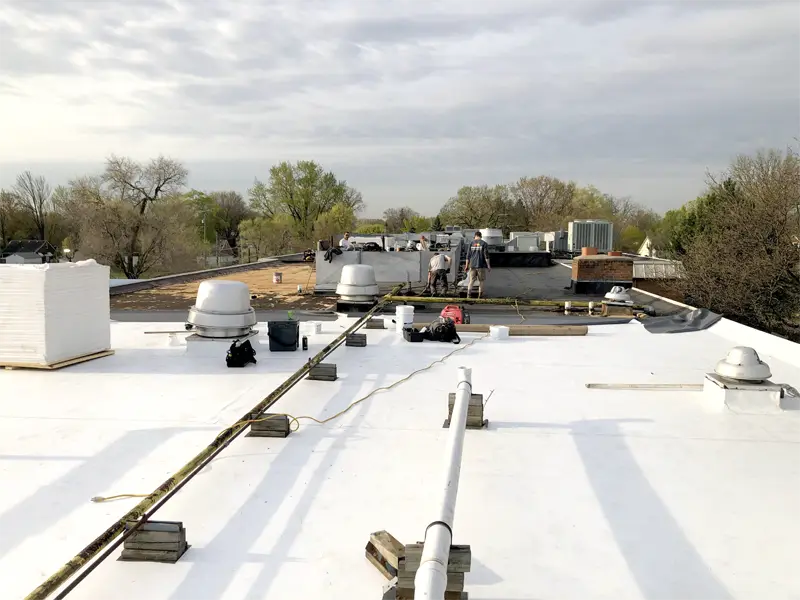
Commercial flat roof installation requires precise drainage planning and durable materials built for Northern Michigan’s unpredictable weather. Whether you need commercial flat roof replacement or new construction installation, properly designed commercial membrane roofing systems protect facilities from moisture intrusion. Preferred Roofing Services installs TPO commercial roofing and EPDM commercial roofing systems engineered for long-term performance.
Schedule a Flat Roof Evaluation
If leaks, ponding water, or membrane wear are present, now is the time to act. Our team assesses your building and outlines clear options for commercial flat roof replacement or repair.
Engineered Performance
Why Flat Roofing Works
Flat and low-slope structures require specialized roofing assemblies. Commercial membrane roofing systems are designed to create a continuous, watertight barrier across large surface areas. Proper installation is critical to prevent seam separation and drainage failure.
TPO commercial roofing offers reflective properties that can improve energy efficiency while maintaining strong seam integrity through heat-welded joints. EPDM commercial roofing provides flexibility and durability, especially in climates with temperature swings and snow load stress.
During commercial flat roof installation, drainage slope, insulation placement, and flashing reinforcement must be carefully coordinated. Commercial flat roof replacement also requires inspection of the substrate to identify saturated insulation or compromised decking. Preferred Roofing Services ensures every layer of the system works together to support reliable building protection.
Signs You Need Replacement
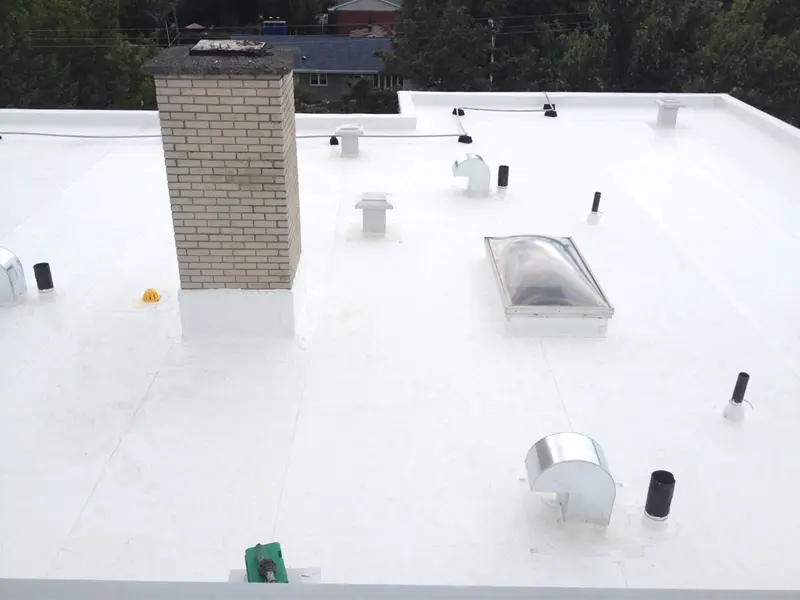
Flat commercial roofs often show early warning signs before major leaks occur. Persistent ponding water, membrane bubbling, seam separation, or recurring patch repairs may indicate the need for commercial flat roof replacement. Ignoring these indicators can be a costly mistake, leading to interior damage and higher repair costs.
Commercial membrane roofing systems depend on strong seam integrity and proper drainage. When seams weaken or flashing deteriorates, water can travel beneath the membrane and saturate insulation. This not only reduces thermal performance but also accelerates structural deterioration.
TPO commercial roofing and EPDM commercial roofing systems both require periodic inspection to maintain performance. Surface punctures from foot traffic or equipment placement can compromise waterproofing layers. A detailed inspection determines whether targeted repair is possible or if full commercial flat roof replacement is the most practical long-term solution.
Preferred Roofing Services evaluates drainage flow, seam condition, insulation stability, and substrate integrity before recommending next steps.
Structured Installation
Our Flat Roofing Process
Effective commercial flat roof installation begins with comprehensive planning and a detailed site evaluation. We assess roof slope, drainage points, insulation performance, structural decking, and existing membrane condition before selecting the most appropriate commercial membrane roofing systems.
This preparation supports proper water management, energy efficiency, and long-term structural reliability. During commercial flat roof replacement, existing membrane layers are removed carefully to expose the substrate and identify hidden concerns. Any saturated insulation or damaged decking is replaced to ensure a stable foundation for new materials. TPO commercial roofing systems are installed with heat-welded seams that create a continuous waterproof barrier across the roof surface.
EPDM commercial roofing membranes are adhered or mechanically fastened with reinforced seam sealing to maintain flexibility and durability in fluctuating temperatures. Drainage design plays a central role in preventing ponding water and premature deterioration. We verify slope direction, inspect drain placement, and confirm that scuppers, gutters, and edge systems function properly before completing installation.
Preferred Roofing Services coordinates commercial projects with structured scheduling to minimize disruption to daily operations. Final inspections confirm seam integrity, flashing reinforcement, insulation stability, and drainage flow before project completion.
By combining detailed preparation with precise installation techniques, we deliver commercial flat roof installation and replacement solutions built to perform in demanding Northern Michigan conditions.
Frequently Asked Questions
How long does commercial flat roof installation take?
Timelines depend on building size and weather conditions, but projects are scheduled to minimize operational disruption.
What is the difference between TPO and EPDM commercial roofing?
TPO uses heat-welded seams and reflective surfaces, while EPDM is a durable rubber membrane system.
How do I know if I need commercial flat roof replacement?
Ponding water, recurring leaks, membrane separation, or saturated insulation often indicate replacement is needed.
Are commercial membrane roofing systems energy efficient?
Many TPO commercial roofing systems offer reflective properties that can improve energy performance.
Can flat roofs be repaired instead of replaced?
In some cases, targeted repairs are possible if the overall membrane and substrate remain sound.
Do you inspect insulation during replacement?
Yes. We evaluate insulation stability and replace compromised sections during commercial flat roof replacement.