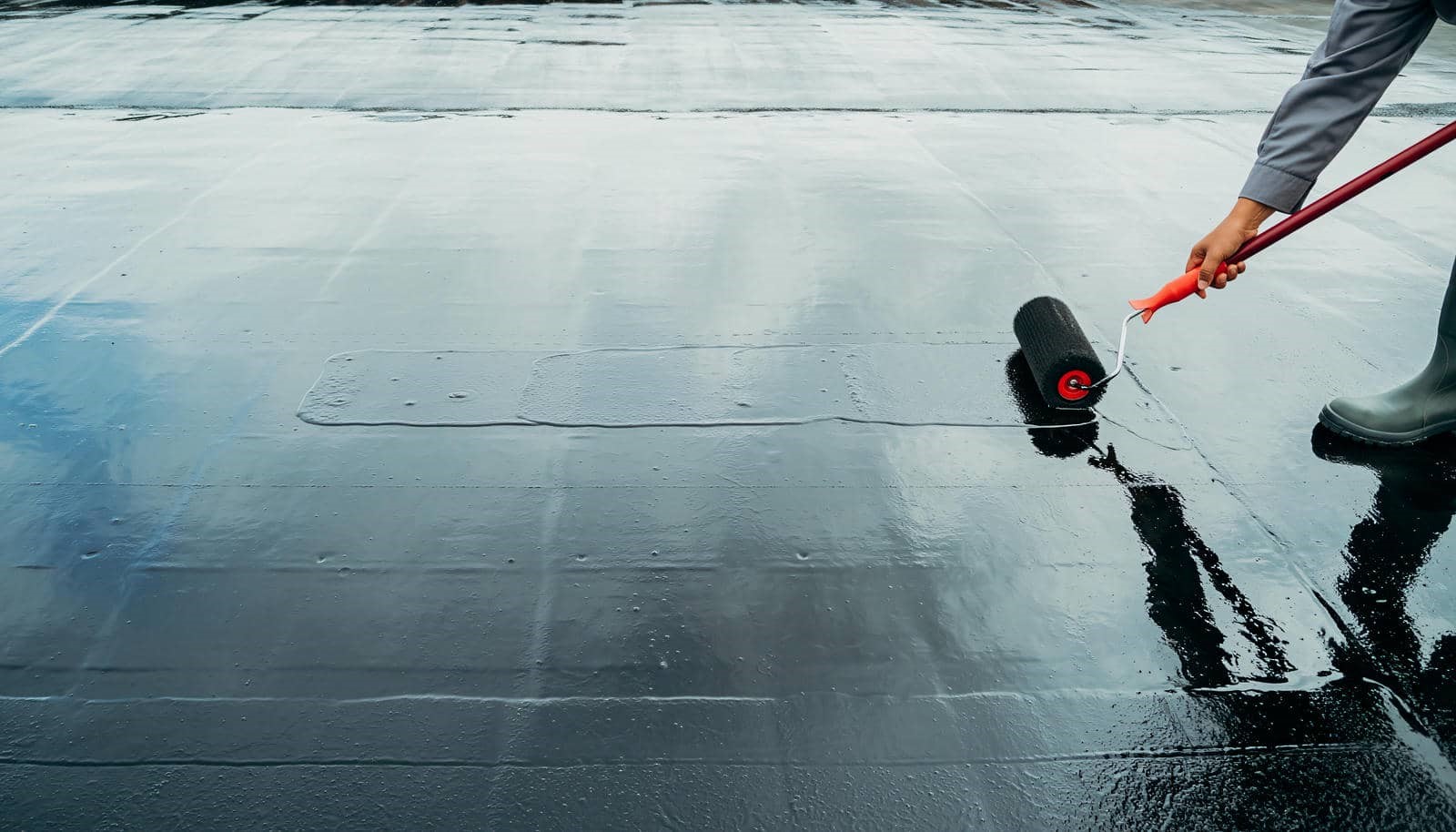
When it comes to restoring flat roofs on commercial buildings, you’ve got several effective methods at your disposal. Each option, from energy-efficient metal roofs to green roof systems, offers unique benefits tailored to different needs. Understanding these restoration methods can help you make informed decisions that enhance durability and efficiency. Let’s explore these top solutions, so you can find the best fit for your building’s requirements.
Key Takeaways
- Energy-efficient metal roofs reflect sunlight, reducing cooling costs and enhancing durability against harsh weather conditions.
- Built-up roofing (BUR) provides long-lasting protection and excellent insulation, minimizing leaks and repair expenses.
- Roof coating applications, like elastomeric or silicone, effectively extend roof lifespans by enhancing energy efficiency and preventing damage.
- Green roofs improve insulation, lower energy consumption, promote biodiversity, and contribute to urban sustainability practices.
- Heavy-duty asphalt shingles offer robust, reliable restoration options, designed for durability and watertight seals in commercial environments.
Energy-Efficient Metal Roofs
When considering a flat roof restoration, you might find that energy-efficient metal roofs offer significant advantages over traditional materials.
These roofs excel in energy efficiency, reflecting sunlight and reducing heat absorption, which can lead to lower cooling costs in warmer months. You’ll appreciate how this minimizes your energy bills and contributes to a more sustainable environment.
Additionally, metal durability stands out as a key benefit. Unlike asphalt or other traditional materials, metal roofs can withstand harsh weather conditions, including heavy rain, snow, and high winds, ensuring long-term performance.
This durability translates into fewer repairs and replacements over time, ultimately saving you money.
Heavy-Duty Asphalt Shingles
Heavy-duty asphalt shingles provide a robust and reliable option for flat roof restoration in commercial buildings.
These shingles come in various asphalt types, each designed to withstand the rigors of commercial environments. When you choose heavy-duty shingles, you’re investing in durability and longevity, which can greatly reduce long-term maintenance costs.
Installation techniques play an essential role in maximizing the performance of asphalt shingles. Properly securing each shingle ensures a watertight seal, preventing leaks and water damage.
It’s vital to follow manufacturer guidelines during installation to maintain warranties and optimize effectiveness.
Additionally, heavy-duty asphalt shingles offer versatility in design, allowing you to match your building’s aesthetic while enhancing its functionality.
By selecting this roofing solution, you protect your investment and contribute to a community of businesses committed to quality and resilience.
Embrace heavy-duty asphalt shingles for a dependable restoration that stands the test of time.
Weather-Resistant Roofing Solutions
When considering weather-resistant roofing solutions, you’ll want to explore durable membrane options that provide long-lasting protection against the elements.
Additionally, reflective coatings can enhance energy efficiency by reducing heat absorption, which is essential for maintaining comfortable indoor temperatures.
Durable Membrane Options
As you explore durable membrane options for flat roof restoration, it’s essential to evaluate materials that withstand harsh weather conditions and offer long-term reliability.
Common choices include EPDM, TPO, and PVC membranes. Each of these durable materials boasts impressive membrane longevity, ensuring your roof can handle UV exposure, extreme temperatures, and heavy rain without compromising integrity.
EPDM is known for its flexibility and resistance to hail, while TPO provides excellent energy efficiency and heat reflectivity. PVC membranes are celebrated for their durability and resistance to chemical exposure.
Reflective Coating Benefits
Reflective coatings offer considerable advantages for flat roof restoration, particularly in enhancing weather resistance.
These coatings create a barrier against harsh environmental elements, protecting your roof from UV damage, moisture, and temperature fluctuations. By reflecting sunlight, they help maintain a consistent roof temperature and considerably reduce heat absorption, leading to energy savings.
You’ll notice lower cooling costs during summer months, making your building more energy-efficient and environmentally friendly. Additionally, these coatings can extend the lifespan of your roofing system, minimizing the need for frequent repairs.
Choosing reflective coatings means investing in a sustainable solution that benefits both your wallet and the planet, fostering a sense of belonging in the community of responsible building owners.
Roof Coating Applications
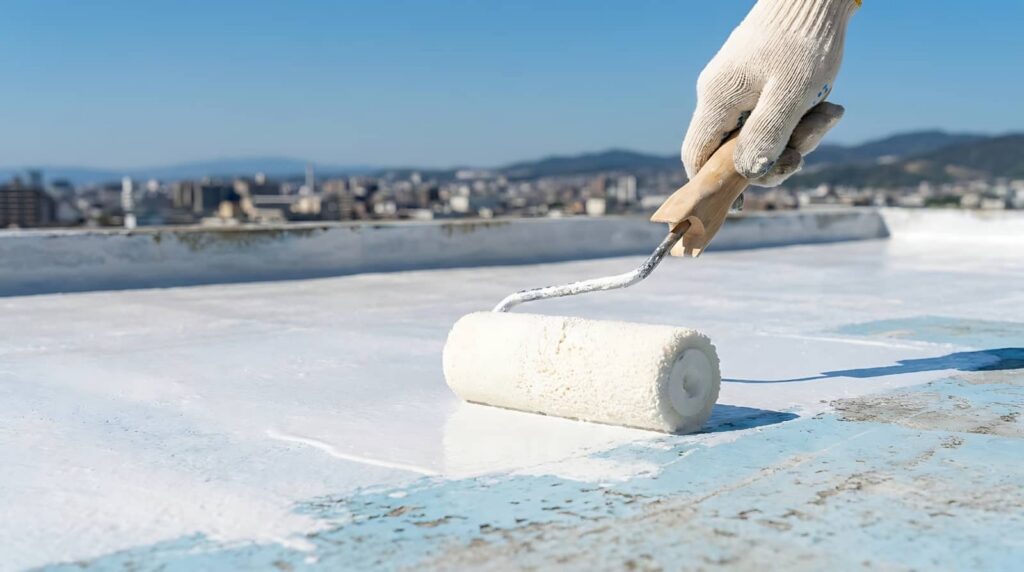
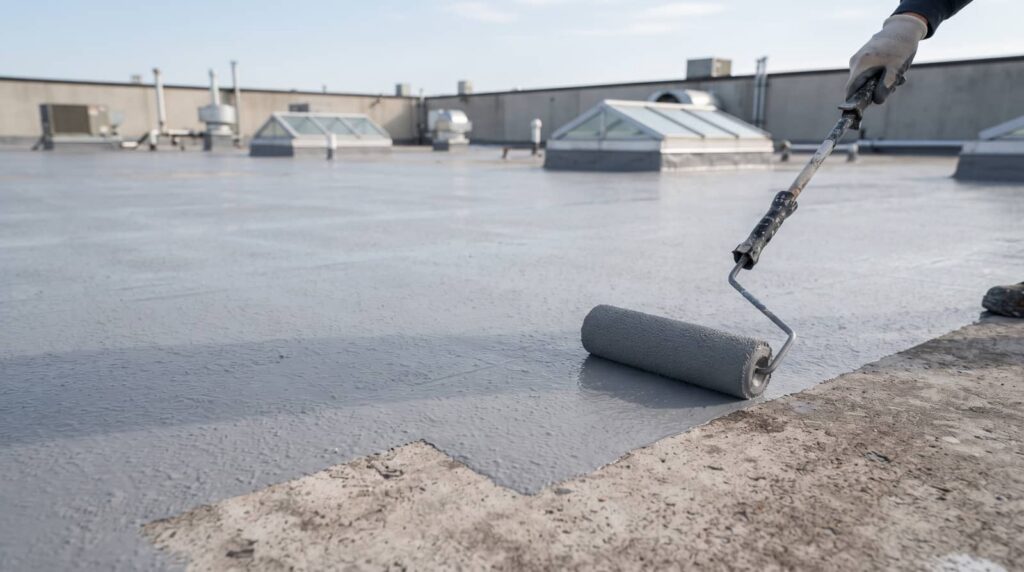
Many commercial building owners find roof coating applications to be an effective solution for extending the lifespan of flat roofs. By choosing the right roof coating types, such as elastomeric, silicone, or acrylic, you can enhance waterproofing, reflectivity, and durability. Each coating type offers distinct advantages, so understanding their properties helps you make an informed decision.
Application techniques are essential for achieving ideal results. Start with a thorough cleaning of the roof surface to remove debris and contaminants. Next, apply a primer, if necessary, to ensure proper adhesion.
For the actual coating, use a roller or spray equipment for uniform distribution, paying attention to any seams and penetrations. Multiple coats might be recommended, depending on the product specifications.
Single-Ply Membrane Systems
When considering flat roof restoration options, single-ply membrane systems stand out for their durability and ease of installation.
These systems offer several single-ply advantages, including lightweight materials, flexibility, and resistance to UV rays and weathering. You can choose between EPDM, TPO, and PVC membranes, each with unique benefits tailored to your building’s needs.
Installation techniques for single-ply membranes are straightforward, often involving mechanical fastening or adhesive methods. This simplicity speeds up the installation process while minimizing labor costs, making it a practical choice for commercial buildings.
Furthermore, single-ply membranes provide excellent energy efficiency, reducing your building’s cooling costs.
By opting for a single-ply system, you’re joining a growing community of building owners who prioritize sustainability and long-term performance.
Embrace this reliable restoration method to enhance your flat roof’s lifespan while enjoying peace of mind.
Built-Up Roofing (BUR)
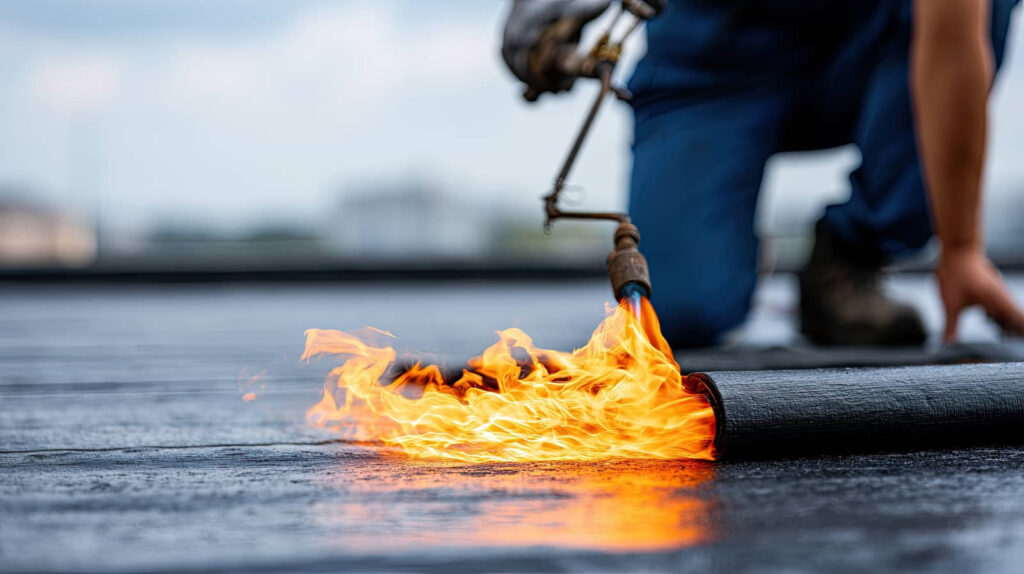
Built-Up Roofing (BUR) consists of multiple layers of asphalt and reinforcing fabrics, creating a durable and waterproof barrier for commercial buildings.
You’ll find that its robust structure provides excellent protection against harsh weather conditions and enhances energy efficiency.
Understanding the benefits, installation process, and maintenance requirements is essential for maximizing the lifespan of BUR systems.
Structure and Composition
While understanding the structure and composition of Built-Up Roofing (BUR) is essential for effective maintenance, you’ll find that this roofing system consists of multiple layers that work together to provide durability and weather resistance.
Typically, BUR includes alternating layers of roof materials, such as asphalt and felt, which are bonded together to create a solid, waterproof barrier. The top layer often features a protective aggregate to enhance UV resistance and physical durability.
This multi-layer design greatly contributes to the roof’s structural integrity, allowing it to withstand various environmental stresses. By understanding how these components interact, you’ll be better equipped to assess your roof’s condition and ensure its long-term performance.
Benefits of BUR
Due to its layered construction, Built-Up Roofing (BUR) offers several significant benefits for commercial buildings. One of the standout advantages is its cost-effectiveness. With multiple layers of protection, BUR minimizes the potential for leaks and damage, reducing long-term repair expenses.
Additionally, the longevity benefits of BUR are impressive; it can last 20 to 30 years with proper care. This longevity means fewer replacements, which is a great relief for your budget and operational downtime.
Furthermore, the layered design provides excellent insulation and UV protection, enhancing energy efficiency and comfort for occupants. By choosing BUR, you’re investing in a reliable roofing solution that supports both your financial goals and the well-being of your building.
Installation and Maintenance
When installing Built-Up Roofing (BUR), proper preparation and technique are essential to ensure a durable, effective system.
To achieve a successful installation, follow these key steps:
Choose Quality Materials: Opt for high-grade roofing materials that meet industry standards for longevity and performance.
Follow Installation Techniques: Adhere to best practices, including proper layering and confirming adequate drainage to prevent water pooling.
Establish Maintenance Schedules: Regular inspections and maintenance are important for prolonging the lifespan of your BUR system.
Schedule assessments at least twice a year and after severe weather.
Green Roof Systems
As commercial buildings increasingly prioritize sustainability, green roof systems have emerged as a viable solution for enhancing both energy efficiency and aesthetic appeal. By integrating vegetation into your flat roof design, you improve insulation and actively contribute to sustainability practices. Green roofs can greatly lower energy consumption, reducing heating and cooling costs for your building.
Moreover, these systems promote biodiversity enhancement, creating habitats for various species, including birds and insects. Implementing a green roof isn’t just a trend; it’s a practical decision that fosters community and environmental well-being.
When you choose to install a green roof, you’re joining a movement dedicated to creating healthier urban environments. It’s crucial to reflect on factors such as plant selection and maintenance to ensure long-term success.
Frequently Asked Questions
How Long Does a Flat Roof Restoration Typically Last?
A flat roof restoration typically lasts 10 to 20 years, depending on durability expectations. Regular maintenance, such as inspections and repairs, can help maximize its lifespan and ensure your investment remains sound over time.
What Are the Costs Involved in Flat Roof Restoration?
Flat roof restoration costs can skyrocket, depending on cost factors like size, labor, and restoration materials. You’ll want to budget wisely to ensure a durable, long-lasting solution that fits your building’s needs perfectly.
Can I Restore My Flat Roof Myself?
Yes, you can restore your flat roof yourself! Use DIY tips to guide you, and choose high-quality restoration materials. Just make certain you follow safety protocols and understand the proper techniques for a successful project.
How Do I Know if My Roof Needs Restoration?
You’ll know your roof needs restoration by conducting regular roof inspections. Look for restoration signs like cracks, blisters, or significant wear. Addressing these issues early helps maintain your roof’s integrity and prolongs its lifespan.
Are There Warranties Available for Flat Roof Restoration?
Sure, you’ve got warranties available for flat roof restoration, but don’t expect them to cover everything. Restoration often includes warranty coverage for materials and workmanship, ensuring you feel secure about your investment.
Summary
In the quest for a durable and efficient flat roof, you’re not just choosing a method; you’re investing in the longevity of your building, much like a knight donning armor for protection. Whether you opt for sleek metal roofs or the eco-friendly charm of green roofs, each solution offers unique benefits tailored to your needs. By selecting the right restoration method, you’re ensuring your commercial space stands resilient against the elements, ready to thrive for years to come.