When a roof starts to fail, it can feel like a cracked shield over your home. Temporary Roof Repair Solutions can help protect your property until permanent repairs can be completed. You should inspect the damage from a safe spot, then cover active leaks with a tarp, sealant, or roofing cement, depending on the size of the problem. Anchor every patch tightly so wind won’t lift it, and document the condition now, because the next step depends on what you find.
Key Takeaways
- Assess roof damage safely from the ground and document leaks, missing shingles, and interior stains before starting temporary repairs.
- Use tarps, roofing tape, or sealants to cover active leaks and prevent further water intrusion until permanent work begins.
- For small punctures or split shingles, clean the area, apply roofing cement, and fasten patches or replacement tabs securely.
- Reseal flashing joints and low-slope cracks with polyurethane sealant or peel-and-stick membrane for short-term waterproofing.
- Treat temporary fixes as emergency protection, and consult a roofer to determine whether repair or full replacement is needed.
What to Do After Roof Damage
After roof damage, you should first assess the situation safely and limit further exposure if you can. Stay clear of unstable areas, and keep your team or household away from leaks, sagging surfaces, and electrical hazards.
If water’s entering, move valuables and set containers to catch drips. Then arrange temporary roof repair solutions that match the damage: tarps, roofing tape, sealants, or emergency patch materials. Secure any covering tightly so wind can’t lift it.
If you’ve got access, document the condition for your records and insurer. Contact a licensed roofing contractor soon, because short-term fixes only stabilize the structure until full repair or replacement.
Acting quickly helps you protect your space, reduce secondary damage, and keep your crew aligned until the permanent work starts.
How to Check for Roof Damage Fast
Once the area is safe, you can check roof damage fast by starting from the ground and working up only if conditions allow. Use binoculars or your phone zoom to scan for missing shingles, lifted edges, bent flashing, sagging lines, and debris buildup.
Look inside for stains, dripping, damp insulation, or daylight at joints. If you’re part of a team handling the issue, document every finding so everyone stays aligned.
- Check gutters for shingle granules
- Inspect chimneys, vents, and skylights
- Note soft spots in ceilings
- Photograph each visible defect
- Mark the worst areas first
Don’t climb if the roof feels unstable, slippery, or storm-damaged. Fast, careful checking helps you make smart next steps and keeps your crew on the same page.
Temporary Roof Repair Options That Work
When you need to stop active leaks quickly, choose a temporary roof repair that matches the damage and the weather.
For small punctures, you can clean the area, apply roofing cement, and press a patch into place.
For split shingles, you can lift the tabs, add sealant under the break, and fasten them with roofing nails.
If flashing has separated, you can reseal the joint with polyurethane roofing sealant and reinforce it with metal-compatible tape.
On low-slope areas, you can use peel-and-stick membrane to bridge cracks and restore a watertight layer.
Always dry the surface first, because moisture weakens adhesion.
These fixes won’t replace a full roof, but they can buy you time, protect your home, and help you stay in control together until permanent repairs start.
When a Tarp Is Enough
A tarp works best when the damage is broad, the leak is active, and you need fast coverage before repairs can begin. You can use it to shield exposed decking, saturated insulation, and open seams while you arrange permanent work.
It’s a solid choice when wind is calm, the roof is reachable, and the tear is larger than a patch can handle. You’ll fit in with crews who choose tarps for emergency control, not as a finish.
- Cover the damaged area fully.
- Anchor the tarp at the edges.
- Keep water flowing off the surface.
- Avoid loose folds that trap wind.
- Inspect for shifting after rain.
If the structure stays stable and dry, you’ve made the right call.
How Long Temporary Repairs Last
Temporary repairs usually last only long enough to stop active intrusion and buy time for permanent work, so you should treat them as short-term stabilization rather than a durable fix.
In practice, your timeline depends on weather, materials, and how well you anchor the patch. A properly secured tarp, sealant, or roof cement can hold for days or weeks, and sometimes longer in mild conditions.
Wind, UV exposure, and standing water shorten that window fast. You should inspect the repair after every storm and at least weekly. If edges lift, fasteners loosen, or moisture returns, the repair’s life is ending.
Stay proactive, document changes, and keep your crew or contractor informed so you’re not caught off guard when conditions shift.
When to Replace the Roof
If you see severe damage like widespread leaks, sagging decking, or repeated failures after temporary repairs, you may need a full roof replacement.
You should compare the cost and reliability of continued repairs against replacement, especially when damage affects structural integrity or multiple roof sections.
Temporary fixes can hold the roof together, but they won’t solve a roof that’s past its service life.
Signs of Severe Damage
How bad is the damage? You can judge severe roof failure by looking for clear structural and material warning signs. If you spot multiple issues, act fast and protect your home community.
- Sagging rooflines or dipped decking
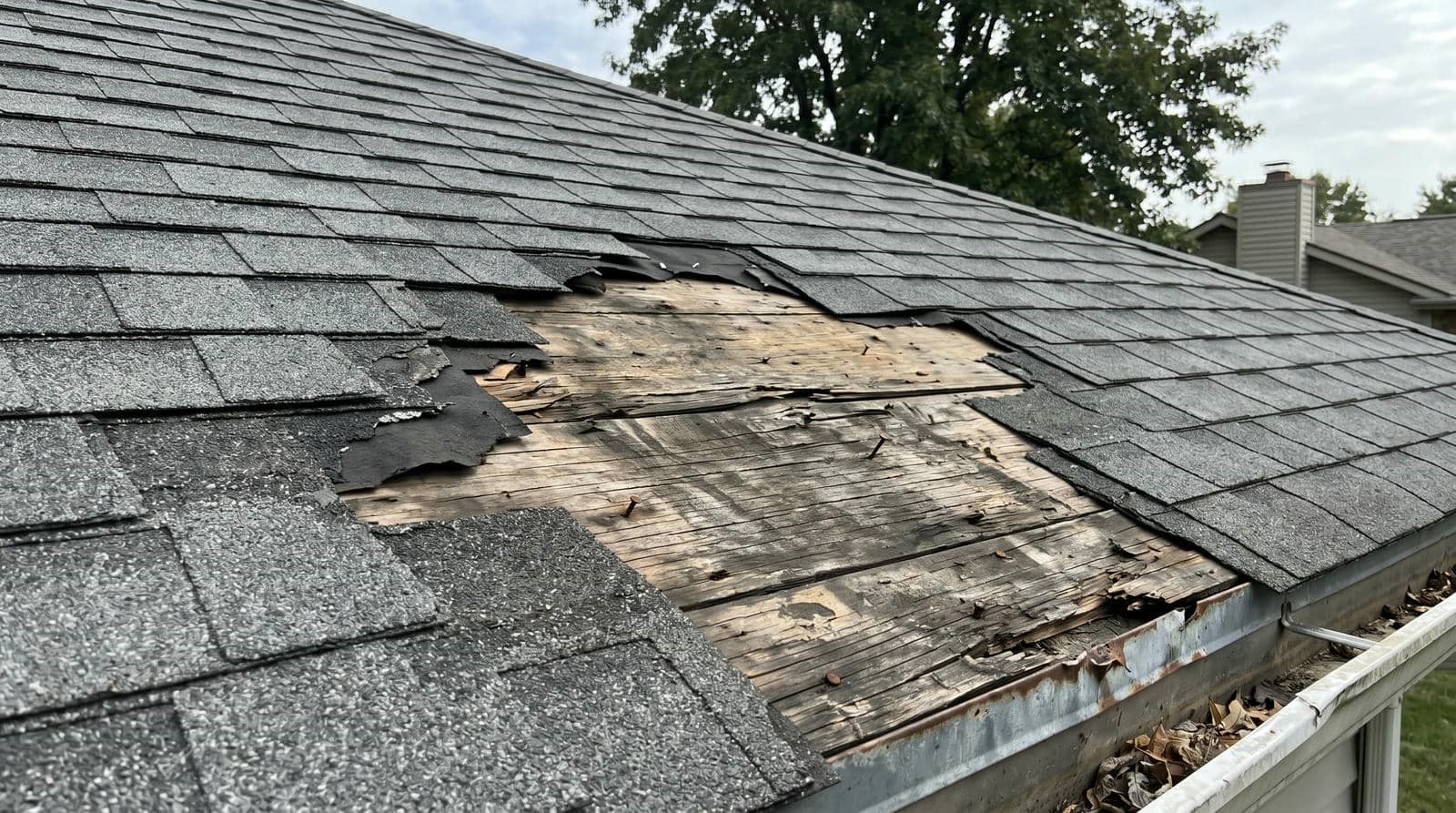
- Large areas of missing, curled, or split shingles
- Daylight visible through the attic
- Active leaks, wet insulation, or staining
- Mold, rot, or soft wood around framing
You’ll also want to watch for repeated storm impact, widespread granule loss, or flashing that’s separated from joints.
These conditions signal that the roof’s system has lost integrity and can’t reliably shed water. In that case, temporary measures only buy time.
Call a qualified roofer, document the damage, and keep everyone inside safe until you get a full inspection and next-step guidance.
Repair Versus Replacement
When damage is limited to a small area, a temporary repair can stop water intrusion and protect the structure until permanent work is scheduled. You can patch flashing, seal a puncture, or tarp an isolated section when the roof deck stays sound and leaks stay localized.
Replace the roof when you see widespread shingle loss, sagging, repeated leaks, soft decking, or storm damage across multiple slopes. If repairs won’t restore watertight performance for more than a short interval, replacement makes more sense. You’ll avoid chasing failures and protect your crew, home, and budget.
A qualified roofer can inspect framing, underlayment, and drainage, then tell you whether a stopgap fix will hold or if it’s time to join the replacement plan with confidence.
Frequently Asked Questions
Can Temporary Roof Repairs Prevent Mold Growth?
Yes, you can reduce mold growth with temporary roof repairs by stopping leaks fast and drying wet materials. You’ll still need ventilation, dehumidification, and prompt permanent repairs, because trapped moisture can keep mold active.
Are Temporary Roof Repairs Safe During Heavy Snowfall?
No, not always—temporary roof repairs during heavy snowfall can buckle under snow’s weight like a weak bridge. You should clear loads, reinforce supports, and inspect leaks often until you schedule permanent repairs safely.
Do Insurance Policies Cover Emergency Roof Tarping?
Yes, many policies cover emergency roof tarping if a covered peril caused the damage and you act promptly. You’ll need receipts, photos, and insurer approval. Always review exclusions, deductibles, and mitigation requirements.
Can I Apply Temporary Roof Repair Myself?
Yes, you can apply temporary repair yourself if you’re safe and the damage is minor. You’ll need tarp, boards, fasteners, and fall protection. Avoid steep, wet roofs, and call a pro when structural damage appears.
What Materials Work Best for Short-Term Roof Sealing?
Self-adhering roofing membrane, asphalt roof cement, and polyurethane sealant work best. You’ll get stronger adhesion with clean, dry surfaces, plus matching flashing tape or tarps to bridge gaps until permanent repairs’re done.
Conclusion
After roof damage, act fast to limit water intrusion and protect your home. Check for missing shingles, punctures, and lifted flashing, then choose a temporary fix that fits the damage. Use a tarp for larger exposed areas, or roofing cement and nails for small splits and holes. Secure every repair tightly so wind can’t peel it back. Think of it as a raincoat for your roof until you’re ready for full replacement.