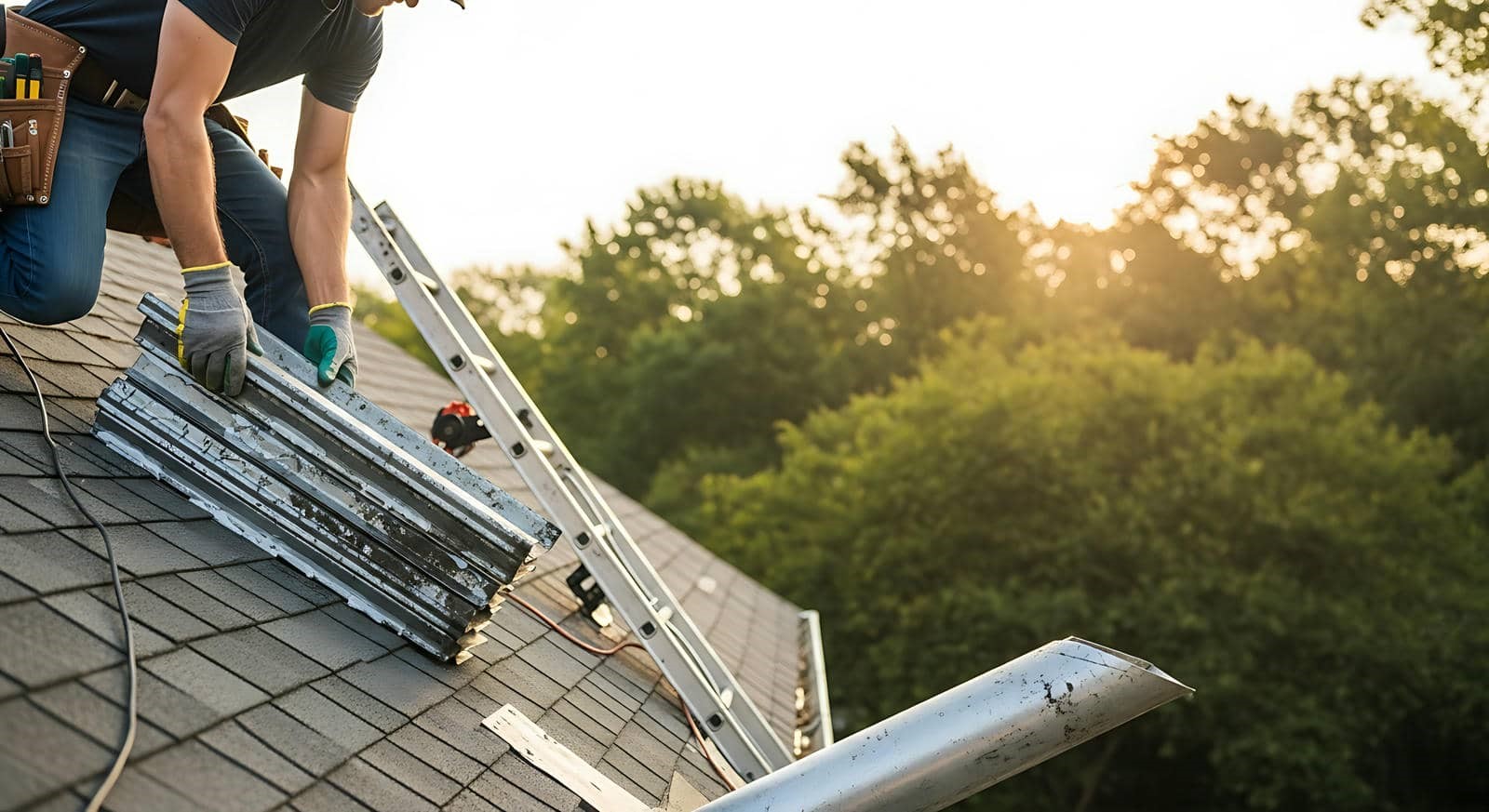
When you spot a roof leak, understanding the Roof Leak Repair Cost is an important part of deciding on the best course of action. The repair cost can swing from a small patch to a major bill, depending on the damage, roofing material, and access conditions. You need to know what drives the estimate, what a contractor should include, and when repair stops making sense. The difference between a $150 fix and a $1,000-plus job often comes down to details you can’t afford to miss.
Key Takeaways
- Small, accessible roof leak repairs typically cost $150–$400, while complex repairs can exceed $1,000.
- Leak location, roof access, materials, and labor complexity are the main factors that affect final repair cost.
- Hidden damage like saturated insulation, damaged flashing, or sheathing can significantly increase repair expenses.
- Asphalt shingles are usually cheapest to repair, while metal, tile, slate, and membrane roofs require specialized, costlier work.
- Get detailed inspections and itemized estimates covering scope, materials, disposal, and warranties to avoid surprises.
How Much Does Roof Leak Repair Cost?
How much does roof leak repair cost? You can expect a roof leak repair cost estimate to start around $150 to $400 for a small, accessible fix and rise to $1,000 or more for complex work.
Your final price usually reflects the leak’s location, the repair method, and the materials your roofer must match.
When you get an estimate, ask for labor, flashing, sealant, underlayment, and disposal to be itemized so you can compare bids cleanly and feel confident in your roofing team.
A precise roof leak repair cost estimate should also define warranty terms and the scope of the repair. That way, you protect your home, stay informed, and make a decision that fits your budget and your crew.
Which Factors Raise Roof Leak Repair Costs?
You’ll usually see higher roof leak repair costs when the roof pitch is steep or the roof height increases, because access, fall protection, and labor complexity all rise.
Hidden damage also pushes prices up, since water intrusion can affect decking, insulation, framing, and interior finishes beyond the visible leak point.
When these conditions are present, your repair estimate should account for both the direct fix and the added diagnostic and restoration work.
Roof Pitch And Height
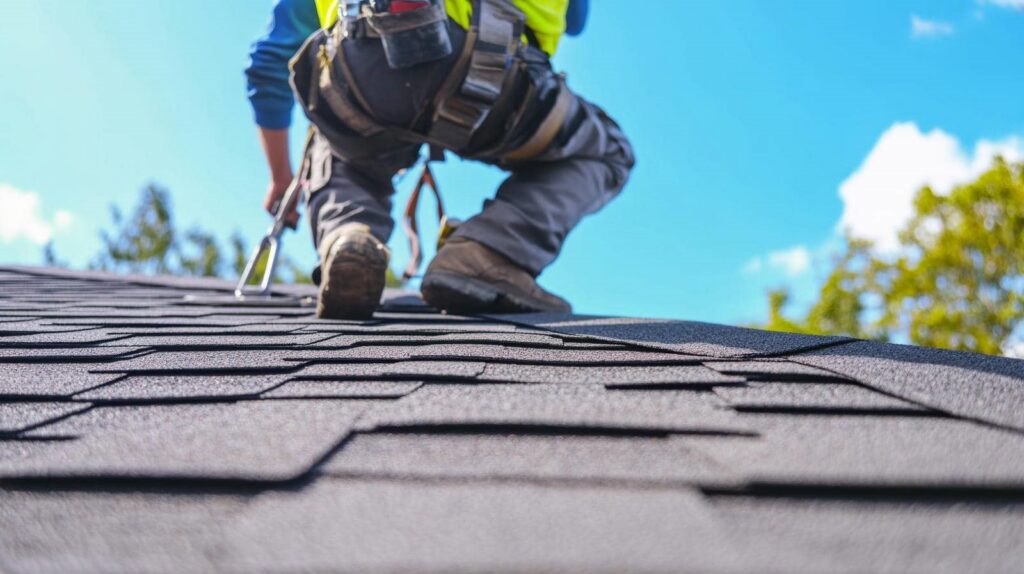
Roof pitch and height can considerably increase a roof leak repair estimate because they affect both access and labor risk. You’ll usually pay more when the roof is steep or elevated, since crews need extra fall protection, staging, and time.
Steep slopes force slower movement and tighter footing.
Tall roofs often need ladders, lifts, or scaffold support.
High edges increase setup, tie-off, and repositioning labor.
Limited access can extend repair time and raise crew coordination costs.
When you’re comparing estimates, check whether the contractor has priced access conditions separately. That detail helps you see why two bids may differ even when the leak looks similar.
On your roof, pitch and height don’t just change difficulty—they shape the whole job.
Extent Of Hidden Damage
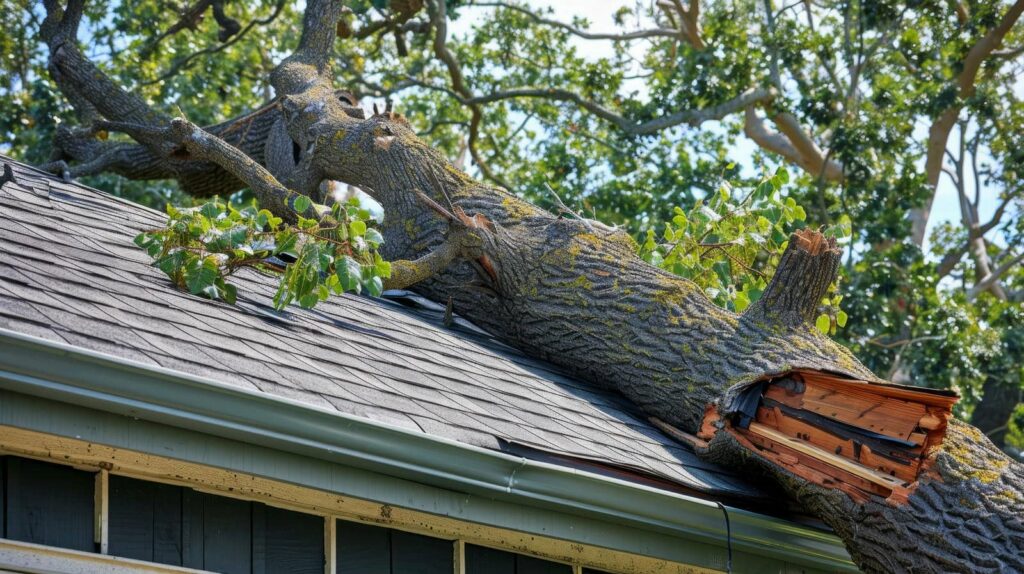
Even when access is straightforward, hidden damage can push a roof leak repair estimate much higher than the visible repair suggests. You may see a small stain, but water often spreads into decking, insulation, rafters, and ceiling assemblies.
Once you open the area, you might uncover rot, mold, corroded fasteners, or saturated underlayment that all need removal and replacement. If the leak has persisted, repairs can require structural carpentry, drying equipment, and antimicrobial treatment, which increases labor and material costs.
You should also expect higher pricing when the damage reaches electrical fixtures, interior finishes, or multiple roof layers. The more you and your roofing team uncover during inspection, the more the scope expands.
That’s why thorough diagnostics protect your budget and help your crew plan the right repair.
Roof Leak Repair Cost by Damage Type
When a roof leak affects different components, repair costs shift based on the damage type because each failure calls for a different level of labor, materials, and access.
If you’re in the homeowner group that wants clear estimates, start by separating surface and structural issues. A small shingle tear may stay modest, while damaged flashing, sheathing, or fascia raises labor time fast.
Interior stains cost less than saturated insulation or ceiling repair, which often require removal and replacement.
- Curling shingles and exposed nail heads
- Rusted flashing around chimneys or vents
- Dark ceiling rings with peeling paint
- Soft, spongy decking underfoot
You’ll usually pay more when water tracks farther from the entry point, because tracing and opening assemblies takes precision.
How Roofing Material Changes the Estimate
Material type can shift your roof leak repair cost estimate quickly, because each system uses different parts, fastening methods, and labor requirements.
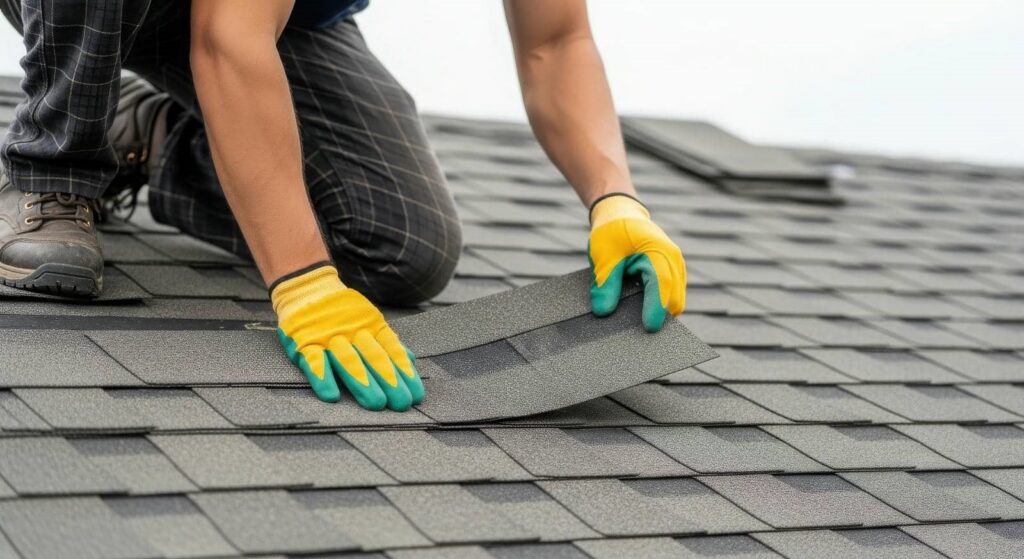
If you’ve got asphalt shingles, you’ll usually face simpler patching and quicker labor.
Metal roofs often need specialized sealants, replacement panels, and careful handling to avoid hidden damage.
Tile and slate demand more precision, since matching units and protecting adjacent pieces takes time and skill.
On low-slope membranes, you may need welded seams or compatible patches, which can raise labor complexity.
You’ll also see price changes when the material is aged, discontinued, or fragile.
In practice, your contractor should match repair methods to the roofing system, so you stay aligned with the right crew, the right process, and a dependable fix.
What’s Included in a Roofing Quote?
A roofing quote should spell out exactly what the contractor plans to inspect, remove, replace, and seal.
You should see labor, materials, disposal, access setup, and cleanup itemized so you can compare bids with confidence.
A precise quote also names the leak source area, the repair method, and any code-compliant components your roof needs.
When you review it, you’re joining a group of informed homeowners who ask for measurable scope and clear deliverables.
- Roof deck inspection and leak tracing
- Damaged shingle, tile, or membrane removal
- Underlayment, flashing, and sealant replacement
- Debris haul-off and final site cleanup
Which Leak Problems Cost the Most to Fix?
The most expensive roof leaks usually involve hard-to-access or structurally sensitive areas, because they demand more labor, more teardown, and more replacement parts.
You’ll typically pay the most for leaks around chimneys, skylights, valleys, dormers, and roof-to-wall connections. These spots often need flashing removal, underlayment replacement, and precise re-sealing to restore the weather barrier.
Leaks that have already soaked decking, insulation, or framing also drive costs up, since you’re not just sealing the entry point—you’re correcting hidden damage too.
Pipe penetrations and failed membrane seams on low-slope systems can be expensive when water has spread beneath the surface.
If you want a reliable estimate, ask your roofer to inspect the full leak path, not just the visible stain, so your crew can fix the real problem together.
When to Repair vs. Replace a Leaking Roof
You should repair a leak when the damage is localized, the decking remains sound, and the roof is otherwise near mid-life with no widespread deterioration.
You should replace the roof when you see repeated leaks, multiple failed patches, sagging, rotted decking, or extensive shingle loss, because those conditions signal system-level failure.
Compare the repair estimate against remaining service life and future leak risk; if recurring fixes approach replacement cost, replacement is the more economical choice.
Repairable Leak Signs
If the leak is small, isolated, and caught early, repair often makes more sense than full replacement. You can usually fix it when the source is a cracked shingle, failed flashing, or a minor fastener gap.
You’ll see water stains that stay localized, limited drip activity after rain, and no widespread decking softening. A repairable leak often leaves the rest of your roof system performing normally, so you stay in control and protect your home with your crew in mind.
- A single dark ceiling spot
- One lifted shingle edge
- Rust around a vent boot
- Damp insulation near one bay
When these signs appear, act quickly. Prompt repairs reduce labor, limit interior damage, and preserve your roof’s service life.
Replacement Red Flags
When damage spreads beyond a single leak point, replacement usually becomes the smarter call.
If you’re seeing recurring stains in different rooms, sagging decking, or widespread shingle loss, your roof’s water barrier is failing systemwide.
You should also watch for brittle flashing, cracked sealants at multiple penetrations, and daylight visible through the attic.
These are structural red flags, not isolated defects.
If insulation stays wet after drying, mold keeps returning, or repairs no longer hold after storms, you’re likely past a simple patch.
At that stage, you need a roof that protects your household as a whole, not just one room.
A qualified inspector can confirm whether the assembly still has enough service life to justify targeted repair.
Cost-Benefit Comparison
Repair makes financial sense only when the leak is isolated, the surrounding materials still have usable life, and the underlying structure hasn’t been compromised.
You should compare the repair quote against remaining roof life, not just today’s damage. If one failed flashing, pipe boot, or shingle run is the issue, repair usually wins.
If you’re seeing recurring leaks, soft decking, or widespread brittleness, replacement often lowers lifetime cost.
- Dry attic framing with one stain.
- Localized missing shingles after a storm.
- Patchable flashing at a vent stack.
- Curling, cracked shingles across multiple slopes.
You belong with homeowners who use numbers, not guesswork: calculate repair cost, expected service life, and future risk.
If repair buys only a short delay, replace it.
How to Get an Accurate Roof Leak Estimate
To get an accurate roof leak estimate, you’ll need a detailed inspection that identifies the leak source, the extent of water damage, and the roofing materials involved.
You should ask a qualified roofer to check flashing, underlayment, penetrations, valleys, and attic framing, then document every damaged area with photos and notes.
Give the contractor roof age, previous repairs, and any interior staining or mold signs so they can size labor, materials, and access requirements correctly.
When you compare estimates, make sure each one lists repair scope, unit pricing, disposal, and warranty terms.
That way, you’re speaking the same technical language as your roofing team and can trust the numbers you receive.
A thorough assessment helps you stay informed, confident, and aligned with your local roofing community.
Ways to Lower Roof Leak Repair Costs
Once you’ve got a detailed roof leak estimate, you can start cutting costs without cutting corners. You can protect your home and stay within budget by acting fast, comparing scoped bids, and choosing repairs that match the damage, not the fear.
Ask your roofer to isolate the leak source, so you’re not paying for unnecessary tear-off or broad replacement. Schedule work during normal hours and bundle small repairs into one visit when possible.
- Inspect flashing and vents first.
- Replace only damaged shingles or tiles.
- Reuse sound underlayment and decking.
- Clear gutters to reduce water intrusion.
If you belong to a neighborhood trade network, ask for referrals and seasonal discounts. Clear communication lowers change orders, and fewer surprises mean tighter pricing and better results for you.
Frequently Asked Questions
How Long Does a Typical Roof Leak Repair Take?
You’ll usually finish a typical roof leak repair in 1-4 hours, though larger damage, steep pitches, hidden water intrusion, or material matching can extend it to a full day or more.
Can Roof Leak Repairs Be Covered by Homeowner’s Insurance?
Usually, yes—your homeowner’s insurance can cover roof leak repairs if a covered peril caused the damage. You’ll need prompt reporting, documentation, and policy review; hidden damage, wear, and neglect often sink your claim.
What Signs Indicate Hidden Water Damage From a Roof Leak?
You’ll notice hidden roof leak damage through stained ceilings, bubbling paint, musty odors, warped drywall, peeling trim, mold growth, soft spots, and unexplained moisture. Inspect attics and insulation for dampness, discoloration, and rot.
Should I Inspect My Attic Before Calling a Roofer?
Yes—you should inspect your attic first; it’s oddly the best place to find the evidence you’d rather not have. Check insulation, staining, moisture, and daylight, then call a roofer with clear, useful details.
Are Emergency Roof Leak Repairs More Expensive?
Yes, emergency roof leak repairs usually cost more because you pay for urgent labor, after-hours dispatch, temporary tarping, and faster material sourcing. You’ll often save money by scheduling standard repairs once damage is stabilized.
Review
You can control roof leak costs by acting early, inspecting carefully, and comparing detailed quotes. You can lower expenses by identifying the damage type, matching the repair to the roofing material, and choosing repair over replacement when the roof still has useful life. You can also reduce risk by asking what’s included, verifying labor and material charges, and confirming cleanup and warranty terms. With a clear estimate, you’ll make faster, smarter, and cheaper repair decisions.