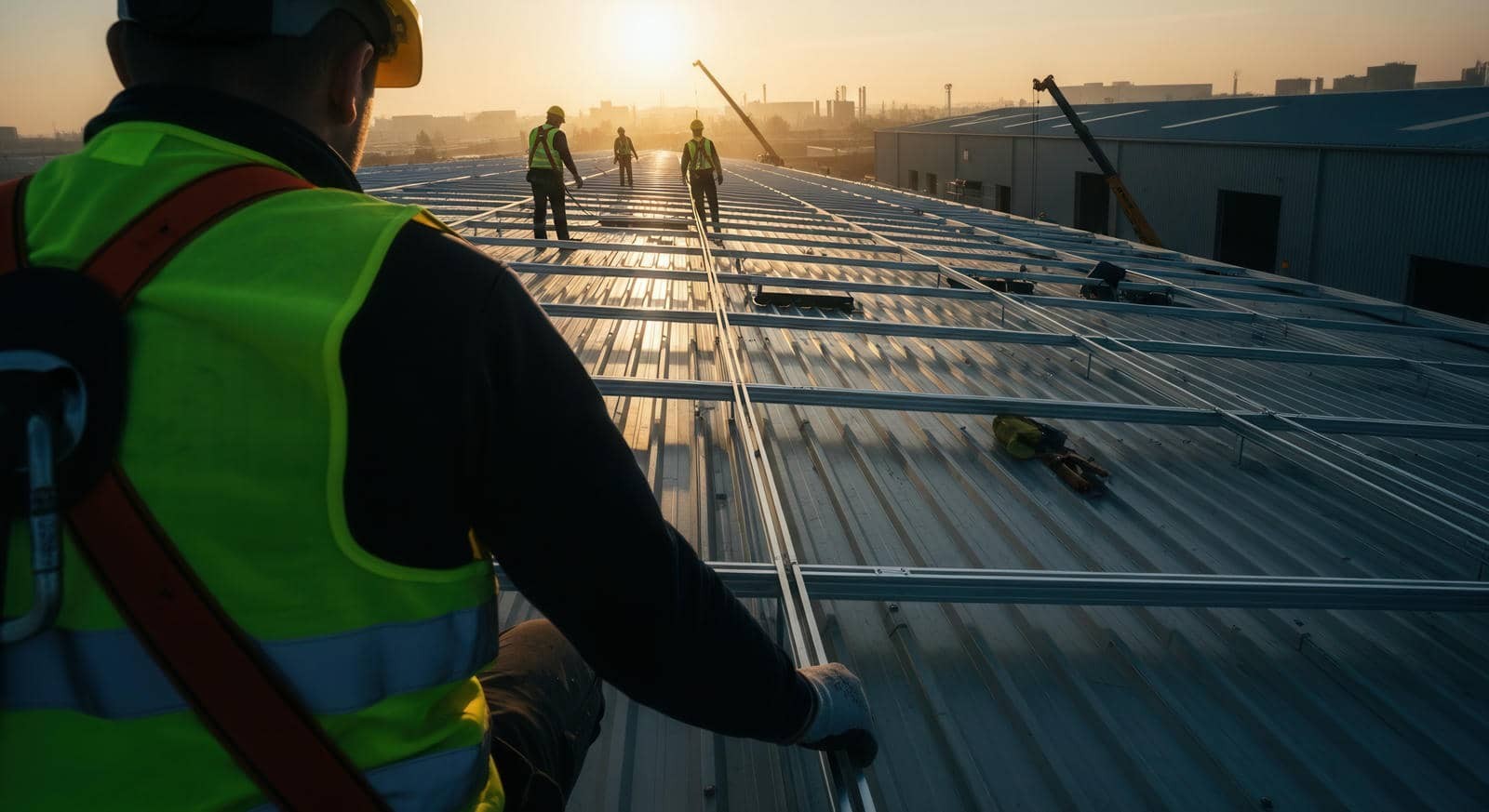
Do commercial roof repair costs really track only the visible damage? You’ll find the answer depends on more than patch size: roof area, pitch, material, access limits, labor rates, permits, and code upgrades can all push the bill higher. If you’re budgeting for Roof Repair Cost Factors, you need to know which of these factors is driving your quote before you approve work that could cost far more than expected.
Key Takeaways
- Repair costs range from a few hundred dollars for minor patches to tens of thousands for major commercial roof damage.
- Roof size, pitch, and material type strongly affect labor, safety, and material costs.
- Hidden damage, structural issues, and leak severity can quickly increase the repair budget.
- Permit fees, code compliance upgrades, and access challenges add significant project costs.
- Clear quotes should define exclusions, hidden damage rates, disposal, testing, and warranty-related expenses.
Commercial Roof Repair Cost Range
Commercial roof repair costs can range from a few hundred dollars for minor fixes to tens of thousands for major damage, depending on the roof size, material, and extent of the problem.
You should treat this as a planning baseline, not a quote. The commercial roof repair cost factors you review will help you set realistic reserves and reduce surprise spend.
For small membrane patches, you may stay near the low end; for widespread leaks or structural corrections, costs rise fast.
You’ll protect your budget by requesting itemized estimates, comparing labor and materials separately, and documenting current conditions before work starts.
When you know the range, you can coordinate maintenance with your team and make decisions with confidence, not guesswork.
What Affects Commercial Roof Repair Costs?
Your commercial roof repair cost depends heavily on the extent of the damage, since larger or more complex issues require more time and materials.
You’ll also pay more when the roof’s material is harder to source or repair, and when labor rates in your area are high.
Roof Damage Extent
Extent of damage is one of the biggest drivers of commercial roof repair cost, since a small puncture or localized leak typically needs less labor, material, and downtime than widespread membrane failure, saturated insulation, or structural deterioration.
When you inspect the roof, measure how far water has traveled, how many sections are compromised, and whether the damage is isolated or systemic. A limited repair lets you target one zone and keep operations moving.
Once damage spreads, you may need larger tear-outs, more safety controls, and longer closures. You’ll also face higher risk of hidden deterioration around seams, drains, and penetrations.
The sooner you document the full footprint, the easier it’s to budget accurately and protect your team.
Material And Labor
Material and labor often make up the largest share of commercial roof repair costs, because the price of membrane, flashing, insulation, fasteners, sealants, and specialty components varies by roof system and availability, while skilled crews, safety setup, and access conditions drive labor time.
You’ll usually pay more when your roof needs matching materials, custom fabrication, or manufacturer-approved parts. Steeper slopes, height, active tenants, and tight staging areas increase hours and equipment needs.
Ask for a line-item estimate that separates material quantities, labor rates, mobilization, and disposal. That helps you compare bids and spot hidden markups.
When you partner with a qualified roofer, you protect budget, reduce delays, and keep your building team aligned on what the repair truly requires.
How Roof Size and Pitch Change the Price
Roof size is one of the biggest drivers of commercial repair cost because larger surfaces take more labor, materials, and time to inspect and fix.
When you manage a bigger building, crews need more setup, more access points, and longer travel across the roof, which raises billable hours.
Pitch matters too. A steeper roof slows movement, limits staging, and increases fall-protection needs, so your contractor may price the job higher.
Flat or low-slope roofs usually let teams work faster, but they can hide ponding and seam issues that add scope.
You’ll get the best estimate when you provide accurate measurements and note slope changes. That helps your team compare bids fairly and budget with confidence.
Why Roof Material Affects Repair Costs
Different roof systems carry different repair costs because their materials, seams, fasteners, and membranes all require specific labor and products. You’ll pay more when your roof uses specialty components, custom flashing, or manufacturer-approved adhesives that aren’t stocked locally.
Metal systems often need precision fabrication and matching coatings, while single-ply membranes demand compatible patches and welding tools. Built-up roofs may require multiple layers of surfacing and bitumen work, which increases labor time.
If your building uses a premium system, expect tighter contractor selection and higher material pricing. You can control costs by knowing your roof type, keeping product records, and working with a team that understands your system.
That preparation helps you stay aligned with other business owners who plan repairs strategically.
How Damage Type Shapes Your Repair Bill
Your repair bill rises with leak severity because a small breach may need only localized sealing, while widespread intrusion can require larger section replacement and moisture remediation.
If water has reached the deck, insulation, or supports, structural damage will push costs higher by adding labor, materials, and inspection time.
You should assess the full extent of the damage early so you can budget accurately and avoid escalation.
Leak Severity
Leak severity often drives the final repair price, because a small seep at a seam usually needs less labor and fewer materials than a widespread leak that has soaked insulation, decking, or interior finishes.
When you catch moisture early, your crew can isolate the source, dry the area, and make a targeted patch fast.
If water has spread across multiple zones, you’ll pay for more inspection time, larger repair sections, and extra cleanup.
You should also expect higher costs when leaks recur, since repeated service visits add labor.
To stay in control, document stains, drips, and odor changes right away, then schedule repair before the problem expands.
That’s how your team protects the budget and keeps your roof system in the group that performs reliably.
Structural Damage
Structural damage can push repair costs up quickly, because a torn membrane, compromised insulation, rusted decking, or a weakened support member takes more labor and specialized materials to correct.
You’ll usually pay more when the repair extends beyond the roof surface and into the substrate or structure. Inspectors may need to expose hidden damage, replace wet insulation, reinforce framing, and restore code compliance.
If your building has ongoing leaks, don’t delay; water intrusion can spread damage fast and raise both material and labor costs.
You can help your team budget accurately by documenting the issue early, comparing scopes, and choosing a contractor that explains each repair item clearly.
That way, you stay in control and keep your facility protected.
When Labor and Access Add Extra Charges
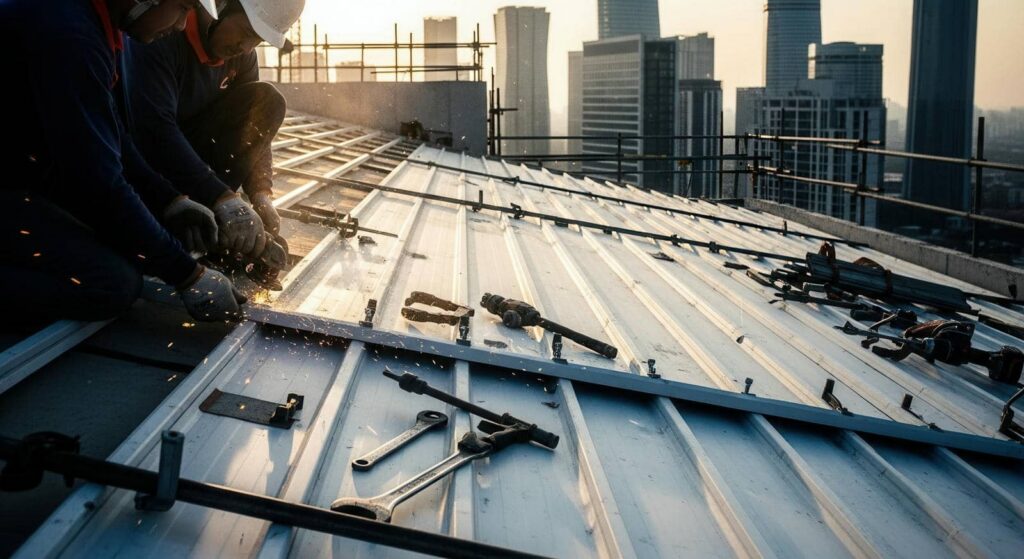
Even when the repair itself is straightforward, labor and access can drive the price up quickly. You’ll pay more when crews need lifts, long setup time, or extra safety measures to reach the work zone.
Steep slopes, tight roof edges, rooftop equipment, and limited staging space slow production and raise man-hours. If your site has restricted hours, tenants below, or active operations, you may also need phased work, which adds coordination time.
To stay within budget, ask your contractor how many workers they’ll assign, what equipment they’ll use, and how access affects daily output. Clear site photos and roof maps help them quote accurately.
When you understand these variables, you can plan confidently and keep your facility in the right repair lane.
How Permits and Code Upgrades Add Costs
Permits and code compliance can add another layer of cost to a commercial roof repair, especially when the work affects structural elements, fire ratings, drainage, or energy performance.
You’ll usually pay permit fees, plan review charges, and inspection costs, and your contractor may need time to coordinate with the local authority.
If the repair triggers current code requirements, you might also need upgraded insulation, improved flashing, parapet changes, or new drainage details. Those items can raise material and labor costs quickly.
You’re best served by budgeting for compliance early, because partial repairs sometimes force broader upgrades.
When your team understands local code triggers, you can avoid delays, reduce change orders, and keep the project aligned with your building’s operating needs and your business community’s expectations.
What to Ask Before Approving a Roof Quote?
Before you approve a commercial roof quote, ask exactly what the contractor included, excluded, and assumed. Confirm the roof area, membrane type, insulation thickness, fasteners, flashing, edge metal, and disposal.
Ask whether the price covers tear-off, substrate repair, moisture testing, permits, safety controls, and warranty registration. Request unit rates for hidden damage, ponding corrections, and change orders so you can compare bids on equal terms.
Verify schedule, crew size, weather delays, and payment milestones. You’ll protect your budget by documenting each allowance and exclusion in writing.
If a quote feels vague, ask for clarification before you sign. That way, you and your facilities team stay aligned, reduce risk, and make a decision your business can trust together.
Frequently Asked Questions
How Can I Tell if a Roof Needs Repair or Replacement?
You can tell by checking for leaks, missing shingles, sagging, blistering, and rising energy bills. If damage is widespread or repairs keep recurring, you’ll likely need replacement; otherwise, targeted repairs should do.
Are Commercial Roof Repairs Tax Deductible?
Yes, you can often deduct commercial roof repairs, like rain sealing a fractured membrane. You’ll usually expense maintenance immediately, but capital improvements may need depreciation. Check IRS rules and your accountant to ascertain compliance.
How Long Do Most Commercial Roof Repairs Take?
Most commercial roof repairs take a few hours to a few days. You’ll see faster turnaround on minor leaks, while structural damage, weather delays, or material sourcing can extend timelines considerably.
Can Repairs Be Done Without Disrupting Business Operations?
Yes, you can often schedule repairs off-hours, section off work zones, and use low-noise methods, so you’ll keep operations moving. You should coordinate access, safety controls, and timing with your contractor early.
Does Insurance Usually Cover Commercial Roof Repair Costs?
Does it? Usually, you’ll get coverage only for sudden damage, not wear. Review your policy, document losses, and work with your adjuster—doesn’t protecting your business feel better when you know what’s covered?
Recap
So, before you treat a roof quote like a magic number handed down from the clouds, check the real cost drivers. You’ll pay more for bigger roofs, steeper pitches, tricky access, damaged materials, and code-required upgrades. Labor rates and permits aren’t exactly optional, despite what optimistic budgets suggest. Ask for a detailed breakdown, compare scope carefully, and confirm what’s included. That way, you won’t discover your “simple repair” came with a very expensive personality.