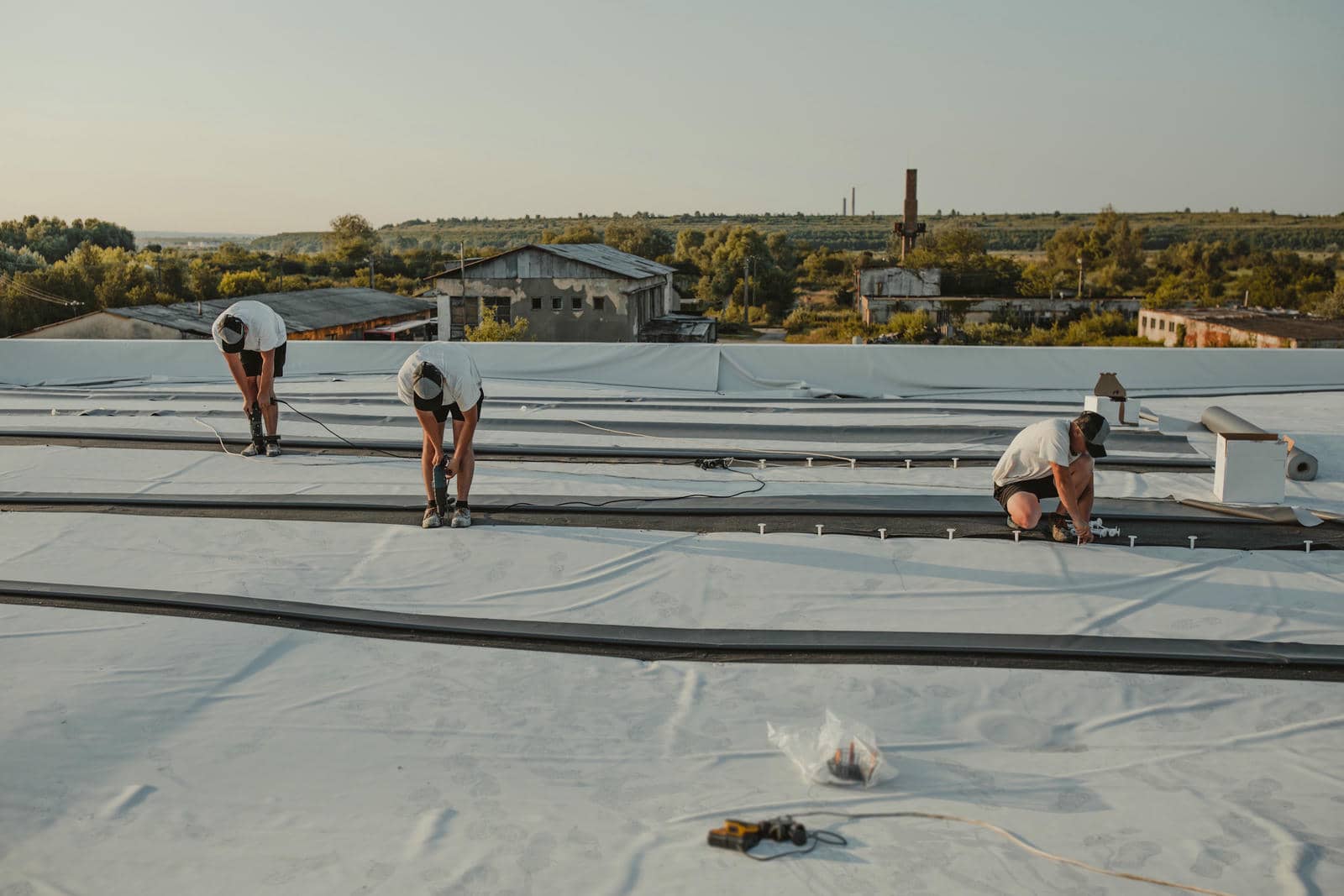
You may not realize that most commercial roof failures start with small, preventable issues long before leaks show up inside. With a planned maintenance program, you can inspect seams, flashings, drains, and membrane wear before damage spreads. That means fewer emergency repairs, better budget control, and a longer service life for your roof. The real question is which service items matter most and how often you should be scheduling them.
Key Takeaways
- Routine commercial roof inspections catch membrane damage, flashing issues, and drainage problems before they become costly leaks.
- Preventive maintenance includes debris removal, drain clearing, and sealant checks to keep water flowing and protect the roof system.
- Early detection of small defects helps extend roof lifespan and reduces emergency repairs and tenant disruption.
- Seasonal and post-storm inspections provide timely damage assessment and keep roofs ready for changing weather conditions.
- Regular maintenance supports predictable budgeting by lowering major replacement costs and limiting unexpected service calls.
What Commercial Roof Maintenance Includes
Commercial roof maintenance includes routine inspections, debris removal, drainage checks, seam and flashing review, and prompt repair of minor damage before it spreads.
You also verify membrane condition, fastener integrity, penetrations, curbs, and rooftop equipment interfaces. With preventive maintenance commercial roofing services, you get scheduled documentation, photo records, and clear findings your facility team can act on.
You should test gutters, scuppers, and downspouts for flow, then clear blockages that trap water. You’ll also confirm sealants stay flexible and exposed edges remain secure.
This process helps your crew stay aligned on roof condition, safety, and upkeep priorities. When you track these items consistently, you build a dependable maintenance routine that supports your building, your operations, and the people who rely on them every day.
How Commercial Roof Maintenance Cuts Repair Costs
You can cut repair costs by catching leaks early, before moisture spreads into insulation, decking, and interior systems.
Routine inspections help you identify small defects, seal failures, and drainage issues while they’re still cheap to correct. That maintenance also extends roof life, so you delay major replacement work and reduce total ownership cost.
Early Leak Detection
During scheduled inspections, you should check seams, flashings, penetrations, drains, and ponding areas for stains, blistering, or soft spots. Infrared scans and moisture meters help you confirm hidden intrusion fast.
When you act early, you reduce emergency calls, limit tenant disruption, and keep your maintenance budget predictable. You also stay in control with a team that knows your roof system and responds before damage escalates.
That’s how you protect your building and stay part of a proactive facility group.
Extending Roof Lifespan
Preventive maintenance doesn’t just stop small problems from getting bigger; it helps your roof last years longer before major replacement becomes necessary.
You protect your asset when you inspect seams, flashings, drains, and membrane wear on a set schedule. That routine lets you catch UV damage, ponding, and fastener loosening before they spread.
You also keep warranties stronger because documented service shows you’re doing your part. When your team stays ahead of moisture intrusion, insulation stays dry, energy loss drops, and structural stress stays lower.
- Clean debris regularly
- Reseal vulnerable penetrations
- Repair minor punctures fast
- Check drainage after storms
- Track maintenance records consistently
What Inspectors Look for on Commercial Roofs
When you inspect a commercial roof, you’ll check for membrane damage such as punctures, blisters, and UV wear.
You’ll also verify that drains, scuppers, and gutters are clear and functioning so water doesn’t pond on the surface.
Finally, you’ll examine flashing and seams for separation, cracks, or loose fasteners that can lead to leaks.
Roof Membrane Damage
You’ll want to look for punctures, splits, blisters, seam separation, and exposed reinforcement. These defects often start from foot traffic, UV exposure, fastener movement, or dropped tools, and they can spread fast if you ignore them.
When you join a proactive maintenance program, you help your team catch issues early and protect the roof’s service life.
- Check seams for lifting or gaps
- Look for cuts around penetrations
- Note blistering or soft spots
- Inspect flashings for tears or shrinkage
- Flag areas with patch failures
Drainage System Issues
Clogged drains, ponding water, and damaged gutters can quickly turn a minor roof issue into a costly leak. During inspections, you should check scuppers, interior drains, downspouts, and gutters for debris, standing water, and restricted flow.
Watch for sagging areas, rust, loose strainers, and blockages that slow runoff after rain. Inspectors also verify that drain bowls sit below the surrounding membrane so water moves off the roof efficiently. If water lingers, it adds weight, stresses the structure, and shortens roof life.
You can stay ahead of problems by clearing outlets, testing flow, and repairing damaged components before storm season. When your team keeps drainage working, you protect the building, reduce emergency calls, and stay part of a facility group that values smart maintenance.
Flashing And Seams
After checking drainage, inspectors move to flashing and seams because these joints often reveal the first signs of roof failure.
You should check metal terminations, pipe boots, curb flashings, and membrane laps for lifted edges, cracks, gaps, and sealant loss. Small defects let water travel beneath the surface and spread damage fast. When you catch them early, your team protects the roof assembly and avoids costly interior claims.
- Verify fasteners stay tight and corrosion-free.
- Confirm seams bond evenly with no fishmouths.
- Inspect counterflashing for separation or movement.
- Look for brittle caulk and UV wear.
- Re-seal weak points before leaks start.
You help your facility stay reliable when you document each issue and schedule timely repairs.
Cleaning, Sealing, and Drainage Care
Regular cleaning, sealing, and drainage care help you prevent small roof issues from turning into costly repairs. You keep debris off the membrane, clear scuppers and drains, and stop water from ponding where it can break down materials.
You also inspect sealants around penetrations, joints, and terminations, then reapply compatible products before gaps let moisture in. When you remove dirt, leaves, and sediment, you protect flow paths and reduce added weight on the structure.
When you maintain tight seals, you support the whole roof system and help your facility team stay ahead of leaks. This practical routine keeps your building in the reliable, well-cared-for condition your crew can count on.
How Often Your Roof Needs Service
Shorter intervals catch small defects before they become leaks, insulation damage, or membrane failure, and that keeps your team ahead of costly downtime.
- Spring and fall inspections
- Post-storm condition checks
- Monthly debris and drain reviews
- Immediate service after leaks
- More frequent visits for older roofs
If your building runs HVAC units, supports frequent access, or sits in harsh sun, wind, or snow, you should tighten the service cycle.
Consistent service helps your roof perform like part of your crew.
How to Choose a Maintenance Plan
Choosing the right maintenance plan starts with matching service to your roof’s age, system type, and risk exposure. You should choose a plan that fits your membrane, drainage details, HVAC load, and local weather.
If your roof is older or sees heavy traffic, pick quarterly inspections with documented repairs. For newer systems, semiannual service may be enough. Make sure the plan includes debris removal, seam checks, flashing review, and leak response times.
Ask for photo reports, priority scheduling, and clear pricing so you can budget without surprises. When you work with a reliable commercial roofing team, you’re part of a proactive group that protects assets together.
That’s how you lower long-term repair costs and keep your building performing.
Review
With preventive maintenance for your commercial roofing services, you keep small issues from becoming costly disruptions. When you inspect, clean, seal, and verify drainage on schedule, you protect flashing, membranes, and fasteners before failure starts. That timing often feels like a coincidence, but it is really good planning meeting the right conditions. As a result, you extend roof life, control repair budgets, and keep your building performing the way it should, season after season.