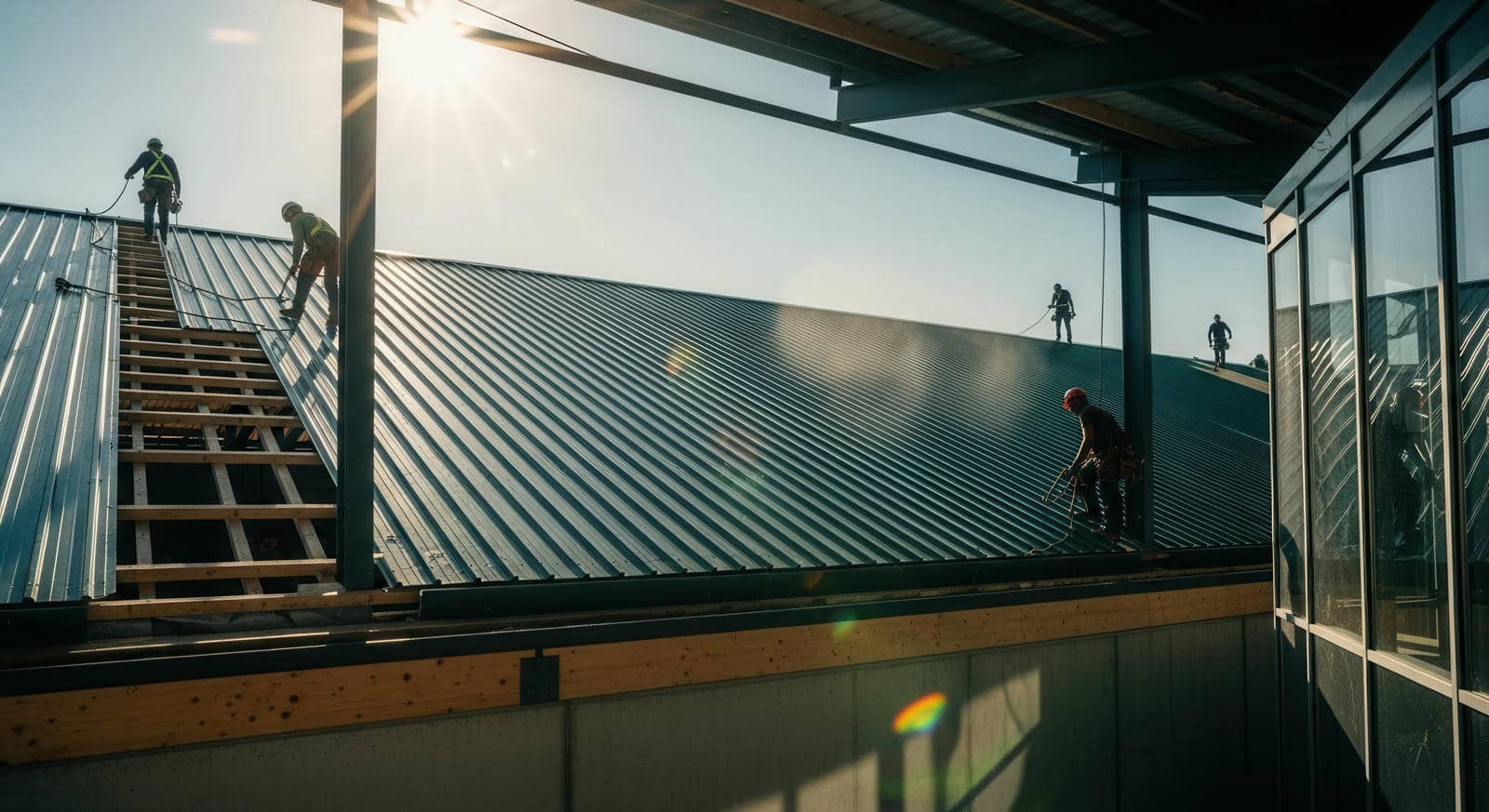
If your roof has begun to show its age, a commercial metal roofing systems may offer a quieter kind of upgrade. You can match standing seam, structural, or retrofit panels to your building’s slope, load limits, and code demands. The right choice can reduce lifecycle costs and improve weather resistance, but the details behind that decision are where things get more interesting.
Key Takeaways
- Commercial metal roofing systems should match deck capacity, slope, wind exposure, and code requirements.
- Standing seam, structural panels, trapezoidal systems, and custom panels suit different spans and roof geometries.
- Proper coatings, concealed fasteners, and corrosion resistance improve durability in harsh climates.
- Metal roofs reduce maintenance, extend service life, and lower lifecycle costs for large buildings.
- Choose qualified installers with tested details, certifications, insurance, and clear quality control procedures.
Which Commercial Metal Roof Fits Your Building?
Choosing the right commercial metal roof starts with your building’s structure, exposure, and performance needs. In this commercial metal roofing systems overview, you evaluate deck capacity, slope, thermal movement, and code requirements before you commit.
You should match panel profile, fastening method, and coating system to your climate, maintenance plan, and budget. If your site faces wind, salt, or heavy precipitation, you need assemblies that control uplift, corrosion, and water intrusion without adding unnecessary weight.
You also want a roof that supports your team’s long-term goals, so specify tested details, qualified installers, and compatible accessories. When you compare options this way, you’ll choose a system that performs reliably, integrates cleanly with your facility, and helps your property feel part of a professional standard.
Best Metal Roofing Types for Large Buildings
For large buildings, the best metal roofing types usually balance span capability, weather resistance, and ease of maintenance.
You’ll typically evaluate standing seam, structural panel, and trapezoidal systems first. Standing seam gives you continuous panels, concealed fasteners, and strong leak resistance, so it works well on wide spans and high-visibility roofs.
Structural metal panels add load-bearing capacity, letting you cover long distances with fewer supports.
Trapezoidal profiles offer efficient drainage and fast installation, which helps on expansive industrial roofs.
If your team needs a system that fits complex geometry, you can also specify custom-fabricated panels with tailored thickness and coating packages.
You’re part of a group that values predictable performance, so choose the profile that matches your snow load, wind exposure, and service access.
Why Metal Roofing Lowers Lifetime Costs
Metal roofing lowers lifetime costs because it reduces repair frequency, extends service life, and limits disruption to operations.
You gain a durable envelope that resists weathering, so you spend less on reactive maintenance and emergency callouts. High-performance coatings and concealed fasteners help your team preserve surface integrity, while factory-controlled fabrication improves fit and reduces install errors.
You also benefit from cleaner inspections, since issues often stay localized and easier to document. Because the system lasts longer, you can defer replacement capital and keep budgets predictable.
That steadiness matters when you manage multiple assets and need your facility to stay aligned with your standards. Over time, lower downtime, fewer interruptions, and reduced lifecycle labor make metal roofing a disciplined, cost-efficient choice for your portfolio.
What to Check for Slope, Load, and Warranty
Before you approve a commercial metal roofing system, verify that the roof slope matches the panel profile, the structure can carry dead, live, wind, and snow loads, and the warranty terms align with your exposure and maintenance plan.
You’ll protect your asset when you confirm these three controls early and document them with the design team.
Slope: Check the minimum pitch for the selected panel and detail any low-slope changes carefully.
Load: Confirm the framing, deck, and attachments support all required loads without overstress or excessive deflection.
Warranty: Review finish, weathertightness, and workmanship coverage, plus exclusions tied to ponding, corrosion, or deferred maintenance.
When you verify these items, you join a well-informed ownership team that avoids preventable risk and keeps performance expectations clear.
How to Choose a Metal Roof Installer
Choosing the right metal roof installer starts with verifying proven experience on commercial projects, not just general roofing work. You should review installed systems similar to yours, including standing seam, panel gauges, and perimeter details.
Ask for manufacturer certifications, insurance, safety records, and references from owners who managed occupied facilities. A qualified installer will explain substrate preparation, thermal movement, fastening patterns, and waterproofing adjustments with confidence.
You’ll also want clear scheduling, documented quality control, and a defined punch-list process. Compare bids by scope, not price alone, because incomplete flashing or misaligned accessories can shorten service life.
When you choose a contractor who understands your asset goals, you join a team focused on durability, code compliance, and long-term performance.
Frequently Asked Questions
How Long Do Commercial Metal Roofs Typically Last?
You’ll usually get 40 to 70 years from commercial metal roofs, and sometimes more with proper maintenance. You can extend service life by inspecting fasteners, managing coatings, and addressing leaks quickly.
Are Metal Roofs Noisy During Rainstorms?
Not necessarily—you’ll often hear less noise than you expect. You can reduce rain sound with proper underlayment, insulation, and deck assembly. In well-designed systems, you’ll feel secure, not distracted, during storms.
Can Solar Panels Be Installed on Metal Roofs?
Yes, you can install solar panels on metal roofs, and you’ll often benefit from easier mounting and better durability. You should use compatible clamps, verify load capacity, and ensure waterproof penetrations to protect your system.
How Do Metal Roofs Perform in Extreme Weather?
You’ll find metal roofs excel in extreme weather: they shed wind, rain, and snow efficiently, resist fire, and handle hail well. Properly fastened panels and quality underlayment keep you protected and confident.
What Maintenance Do Commercial Metal Roofs Require?
You’ll need to inspect seams, fasteners, flashings, coatings, and drainage regularly, then clean debris, clear gutters, and reseal worn joints. You should also fix corrosion, damage, and loose panels promptly to keep your roof performing reliably.
Conclusion
You’d think the cheapest roof is the smartest one—until it starts costing you in leaks, repairs, and downtime. When you choose a commercial metal roofing system, you’re investing in strength, efficiency, and long-term value. Match the panel type to your building, verify slope and load requirements, and protect the warranty with qualified installation. Do that, and your roof won’t just cover your structure—it’ll quietly improve performance for decades.