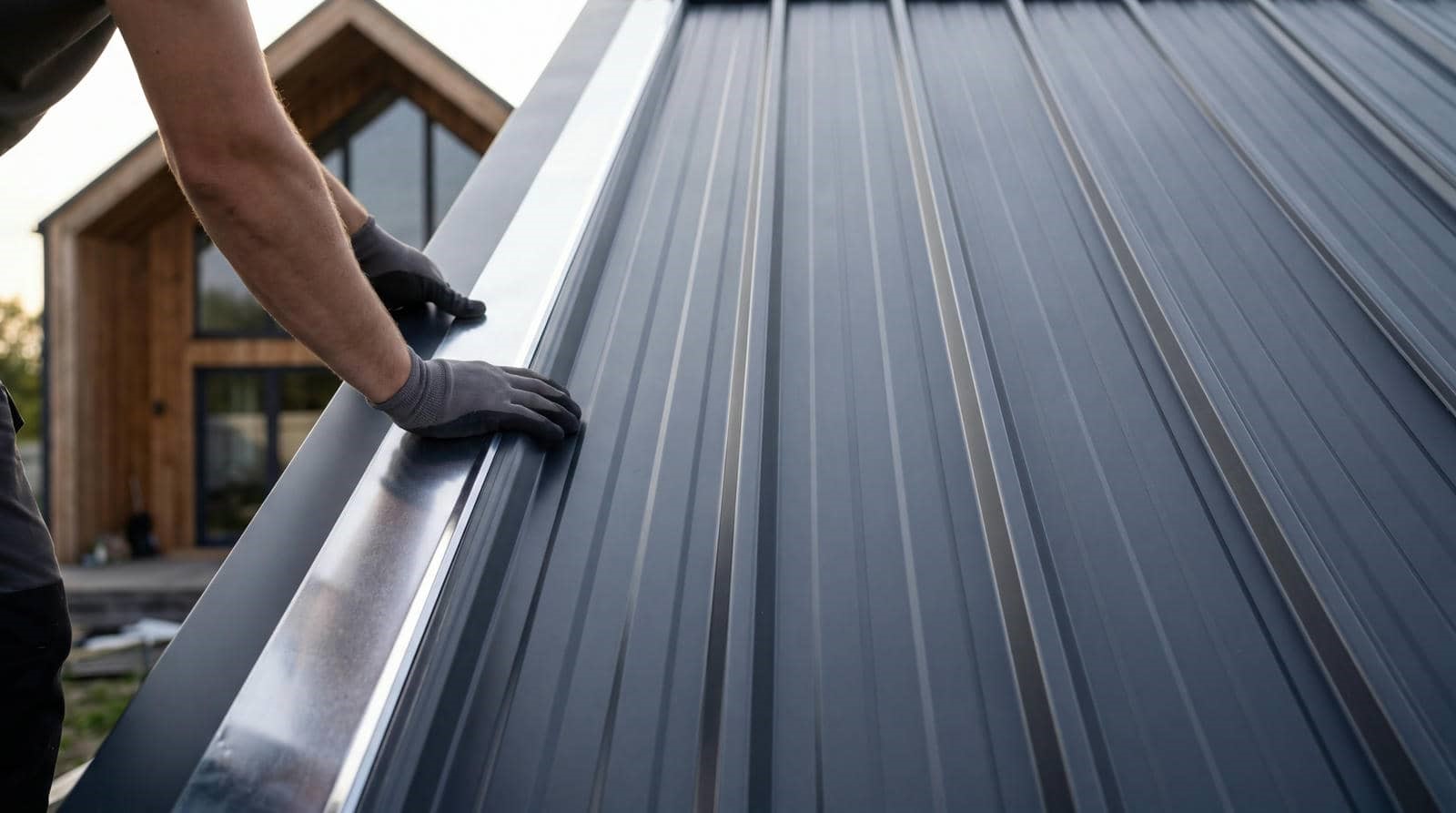
Understanding the Metal Roofing Cost Per Square foot is one of the first steps when planning a new roof or replacement. Metal roofing can range from $1.50 per square foot for basic steel to $25.00 for premium copper, and that spread can change your budget fast. You’ll see costs rise with steeper pitches, complex rooflines, and higher labor demands. But material price is only part of the equation, and the way you choose to build can shift the total more than you might expect.
Key Takeaways
- Installed metal roofing costs vary by roof size, pitch, labor, and local pricing, so focus on total installed price.
- Steel typically costs $1.50–$4.00 per square foot, aluminum $3.00–$6.00, and copper $15.00–$25.00.
- Roof complexity, steep slopes, valleys, penetrations, and hidden repairs can significantly increase overall costs.
- Labor makes up a large share of metal roofing expense, with skilled crews and local wage rates affecting pricing.
- Get itemized estimates 60–90 days early, compare quotes, and consider simpler roof designs or off-season scheduling to save money.
How Much Does Metal Roofing Cost Per Square Foot?
So, how much does metal roofing cost per square foot? You can expect metal roofing cost per square foot to land in a measurable range, often shaped by roof size, pitch, labor, and local pricing.
If you’re comparing quotes, focus on the installed price, because that’s where your real total appears. A straightforward roof usually costs less than a complex one, and steep angles or extra penetrations can push the number up.
You’ll often see higher labor on homes that need more prep or custom detailing. To stay grounded, ask for itemized estimates, compare the same scope, and verify what each bid includes.
That way, you’ll join the informed homeowners who make decisions with confidence, not guesswork.
Metal Roofing Cost by Material
Metal roofing cost by material varies considerably because each metal offers a different balance of durability, weight, finish, and labor requirements.
You’ll usually see these common ranges per square foot for materials alone:
Steel: about $1.50 to $4.00. You get a practical, budget-friendly option that fits many homes.
Aluminum: about $3.00 to $6.00. It’s lighter and often chosen when you want solid value with a clean look.
Copper: about $15.00 to $25.00. You pay more, but you join a group of owners who value long life and a distinctive finish.
When you compare options, focus on total value, not just the sticker price.
The right material helps you feel confident, informed, and aligned with your roof goals.
Which Factors Increase Metal Roofing Costs?
Several factors can push your metal roofing cost above the base material price, especially roof complexity, labor intensity, and added system components.
You’ll usually see higher totals when your roof has steep slopes, multiple valleys, dormers, or unusual angles, because each detail adds measurement, cutting, and waste. Taller homes and hard-to-access sites also raise the project’s logistical demands.
Material upgrades such as thicker panels, premium finishes, underlayment, and ventilation accessories can increase your per-square-foot cost fast.
In many projects, removal of an old roof and repair of hidden decking issues add measurable expense too.
When you compare quotes, focus on these variables together, not just panel price. That’s how you get a realistic number and make smart decisions with your roofing team.
How Labor Affects Metal Roof Pricing
Labor often makes up a large share of metal roof pricing because installation is more technical than many homeowners expect. You’re paying for trained crews, careful layout, and secure fastening that protect long-term performance.
When you compare bids, labor can shift cost per square foot by several dollars, especially if the job needs extra prep or custom trim work. Skilled installers also reduce errors, which helps you avoid callbacks and wasted materials.
Crew experience: Faster, cleaner work usually costs more upfront.
Local wage rates: Higher labor markets raise your total installed price.
Project logistics: Material handling and site access affect hours billed.
If you want the best value, ask for itemized labor estimates so you can compare crews with confidence and choose the team that fits your budget.
How Roof Pitch and Shape Change Costs
A steeper or more complex roof usually raises your metal roofing cost per square foot because installers need more time, safety equipment, and custom flashing to manage the layout accurately.
You’ll often see costs climb as pitch increases, since steep slopes slow movement and increase setup hours. Valleys, dormers, hips, and multiple roof planes also add measurements, cutting, and waste, so your budget absorbs more labor and material overlap.
A simple gable roof typically prices lower because crews can cover larger sections with fewer changes.
If your home has many intersections, expect tighter tolerances and more detailing, which can push costs up by a measurable margin.
When you compare estimates, ask how pitch and shape were calculated so you can feel confident your quote reflects your roof’s actual complexity.
Standing Seam vs. Corrugated Metal Costs
Once pitch and roof shape set the baseline, the next major cost difference comes from the panel system you choose: standing seam usually costs more than corrugated metal because it uses concealed fasteners, tighter panel fabrication, and more specialized installation.
You’re comparing two clear cost profiles, and the gap usually reflects labor and detailing, not just metal thickness.
Standing seam often delivers a higher installed cost per square foot because panels lock together and need precision.
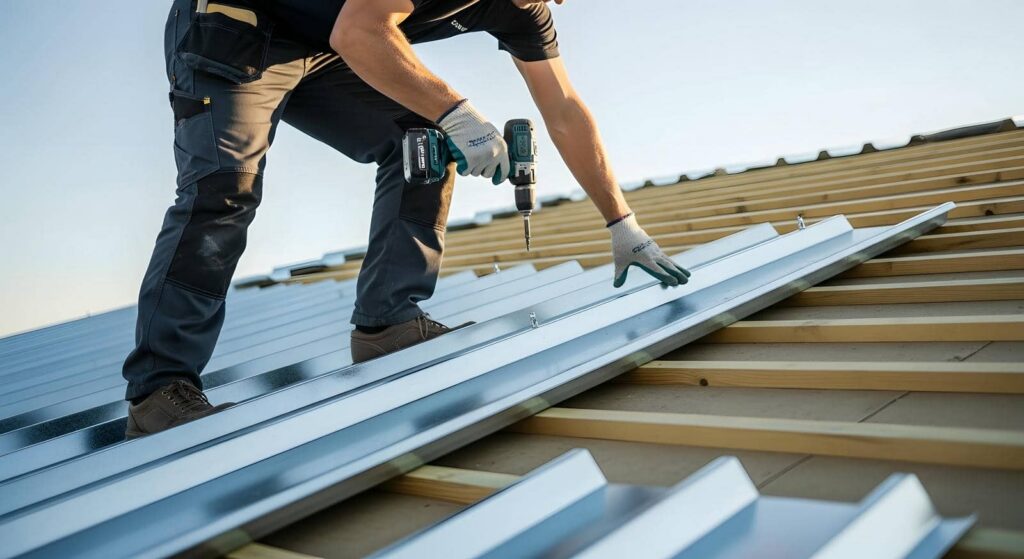
Corrugated metal is typically priced lower because crews can install it faster with exposed fasteners.
Your total budget also shifts with seam height, panel length, and trim complexity.
If you want a sleek, unified look and stronger weather resistance, you’ll pay more.
If you’re prioritizing value, corrugated panels usually keep your numbers lower.
How to Lower Metal Roofing Costs
You can lower metal roofing costs by comparing material options, since panels, coatings, and gauge choices can shift cost per square foot considerably.
You’ll also cut labor and waste if you simplify the roof design, because fewer valleys, penetrations, and cuts reduce installation time.
Timing the project strategically can help too, as off-season scheduling and better contractor availability may improve pricing.
Compare Material Options
Material choice is one of the fastest ways to control metal roofing cost per square foot, because each option has a different price point, lifespan, and installation profile.
You can usually lower your upfront spend by choosing materials that match your budget and climate, while still joining the group of owners who value durability.
Aluminum: Often lighter and corrosion-resistant, it fits coastal conditions and can reduce long-term maintenance.
Steel: Commonly the lowest-cost metal choice, it delivers strong value when you want solid performance without premium pricing.
Copper: Highest cost, but exceptional longevity and aesthetics can justify the investment if you’re optimizing for lifecycle value.
Compare warranty terms, coating quality, and local labor availability.
That data helps you select a material that balances savings with dependable protection.
Simplify Roof Design
Roof geometry has a direct impact on metal roofing cost per square foot, because every extra ridge, valley, dormer, or roof plane adds labor, flashing, and material waste.
You can lower costs by choosing a simpler profile: a gable or hip roof typically requires fewer cuts and fewer custom alterations than a highly segmented design. That reduction matters, since more intersections usually mean more installation time and more scrap.
If you’re planning a new build, keeping slopes regular and aligning rooflines can trim both material and labor inputs.
If you already have a complex roof, focus on limiting decorative add-ons that create breaks in the surface.
In practical terms, cleaner geometry helps you stay within budget while joining the group of homeowners who value efficiency and predictable pricing.
Time Project Strategically
Timing your metal roofing project well can trim costs because labor demand, material pricing, and weather delays all move the final per-square-foot number. You’ll usually see better bids when you schedule installation during late winter or early fall, when crews aren’t booked out and suppliers often run steadier pricing.
By planning ahead, you can compare quotes without pressure and join the group of homeowners who lock in predictable budgets.
- Request estimates 60 to 90 days early to catch lower labor rates.
- Buy materials before peak storm season to avoid surcharges.
- Choose a dry window so you reduce delay-related labor costs.
When you track seasonal trends, you make a sharper financial decision and protect your project’s cost per square foot.
Frequently Asked Questions
How Long Does a Metal Roof Typically Last?
You can expect a metal roof to last 40 to 70 years, and premium systems often reach 80-plus. Your installation quality, climate, maintenance, and material choice all shape longevity, so plan accordingly.
Does Metal Roofing Improve Home Energy Efficiency?
Yes—your metal roof can improve efficiency by reflecting solar heat, reducing cooling loads 10%–25%, and, when insulated well, limiting thermal transfer. It’s a win-win for you, especially if you want lower bills and comfort.
Are There Tax Credits for Installing Metal Roofing?
Yes, you may qualify for federal energy tax credits if your metal roof meets ENERGY STAR or IRS efficiency standards. You should check current rules, local incentives, and installer documentation, because eligibility changes and savings vary.
Can Metal Roofing Be Installed Over Existing Shingles?
Yes, you can install metal roofing over existing shingles if local codes allow and the roof deck’s sound. You’ll save removal costs, but you may need extra underlayment, inspection, and ventilation to protect your investment.
What Maintenance Does a Metal Roof Require?
You’ll inspect seams, fasteners, flashing, and debris, like a ship’s crew checking rigging before storm season. Clean gutters, remove leaves, and tighten loose panels yearly; hail or salt may need more frequent checks.
Wrap-Up
When you compare metal roofing costs per square foot, the numbers tell a clear story: steel often lands between $1.50 and $4.00, while copper can reach $25.00. That gap shows how much material choice drives your budget. You can lower your total by choosing a simpler roof design, getting itemized bids, and scheduling during slower seasons. If you plan carefully, you’ll control labor, reduce repairs, and make your roofing investment more predictable.