
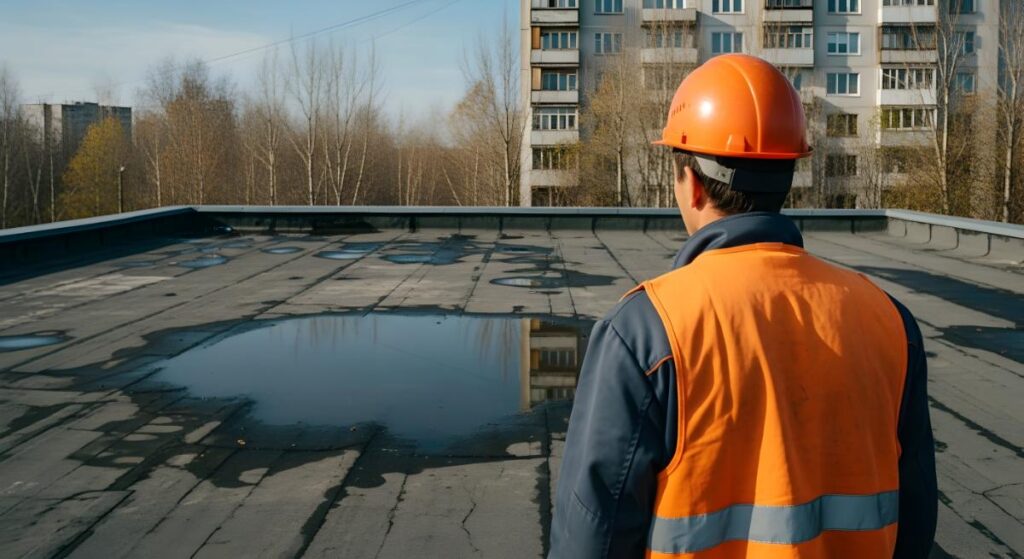
Understanding the top causes of flat roof leaks can help you identify potential problems before they escalate. From poor installation techniques to environmental factors, several critical elements contribute to flat roof leaks. By recognizing these factors, you can take proactive steps to safeguard your investment. Let’s explore the key reasons behind flat roof leaks and how you can address them effectively.
Key Takeaways
- Poor installation techniques can lead to inadequate sealing, increasing the risk of leaks in flat roofs.
- Aging and deterioration of roofing materials, such as UV damage, can compromise roof integrity over time.
- Insufficient drainage design, including clogged gutters, can result in water pooling and subsequent leaks.
- Punctures and tears in the membrane from foot traffic or debris are common causes of leaks in flat roofs.
- Inadequate sealing around penetrations like vents and pipes can allow water intrusion, leading to leaks.
Poor Installation Techniques
When you consider the longevity of a flat roof, poor installation techniques can greatly undermine its integrity. You mightn’t realize that the installation quality plays a vital role in preventing leaks.
If a roof isn’t properly installed, issues such as inadequate sealing or improper drainage can arise, leading to costly repairs down the line. A skilled workforce is essential for ensuring that every detail is addressed, from the initial measurements to the final touches.
Without their expertise, you risk encountering problems like punctures or seams that aren’t sealed correctly. It’s important to invest in professionals who understand the nuances of flat roof systems, as they can help you avoid future headaches.
By prioritizing installation quality and selecting a knowledgeable team, you’ll enhance your roof’s lifespan and foster a sense of security in your home.
Aging and Deterioration of Roofing Materials
As roofing materials age, their ability to protect your home diminishes, making regular inspections essential. The material lifespan of flat roofs can markedly vary depending on wear factors such as weather conditions, UV exposure, and environmental stressors. Understanding these factors can help you anticipate issues before they arise.
| Material Type | Typical Lifespan | Common Wear Factors |
|---|---|---|
| EPDM | 20-30 years | UV damage, punctures |
| TPO | 15-25 years | Heat aging, seams failure |
| Modified Bitumen | 20-30 years | Cracking, moisture issues |
| Built-Up Roofing | 15-25 years | Blistering, degradation |
| PVC | 20-30 years | Chemical exposure, tears |
Lack of Proper Drainage
When it comes to flat roofs, proper drainage is essential to prevent leaks.
Insufficient slope design can lead to water pooling, while clogged drainage systems exacerbate the issue, creating a risk for leaks.
Additionally, inadequate gutter maintenance can allow debris to accumulate, further obstructing water flow and increasing the likelihood of damage.
Insufficient Slope Design
Insufficient slope design can lead to serious drainage issues on flat roofs, causing water to pool instead of draining properly.
When you’re planning your roof, keep these design considerations in mind to avoid potential leaks:
Minimum Slope: Confirm at least a 1% slope to facilitate proper water runoff.
Drain Placement: Position drains strategically to maximize water flow towards drainage solutions.
Material Selection: Choose roofing materials that complement the slope and enhance drainage efficiency.
Clogged Drainage Systems
Even with a well-planned slope, flat roofs can suffer from leaks if drainage systems become clogged. Without proper drainage maintenance, you risk water pooling on your roof, leading to significant structural damage and costly repairs. Regular inspections are essential to ensure that drains, scuppers, and gutters are free from debris.
| Drainage System Component | Importance |
|---|---|
| Drains | Prevent water pooling |
| Scuppers | Enhance water flow |
| Gutters | Direct water away |
| Downspouts | Minimize overflow |
You belong in a community that values proactive maintenance. Neglecting these components can create a troubling cycle of leaks and repairs, so stay vigilant and ensure your drainage systems are working efficiently.
Inadequate Gutter Maintenance
Inadequate gutter maintenance can lead to serious drainage issues on flat roofs, as clogged or damaged gutters fail to direct water away effectively.
This can result in leaks and costly repairs. To ensure proper water diversion, it is essential to prioritize regular gutter cleaning and maintenance.
Here are three essential tips:
Inspect Regularly: Check your gutters for debris, rust, or sagging. Make it a habit to inspect them at least twice a year.
Clear Clogs Promptly: Remove leaves, twigs, and other blockages to allow for smooth water flow.
Repair Damage: Address any cracks or holes immediately, as even minor damage can lead to significant leaks over time.
Punctures and Tears in the Membrane
Punctures and tears in the membrane are common issues that can lead to significant leaks in flat roofs.
You might encounter these problems due to foot traffic, severe weather, or improper installation.
Regular maintenance and careful inspections can help prevent these damages and extend the life of your roofing system.
Common Causes Identified
While flat roofs are designed for durability, punctures and tears in the membrane can compromise their integrity and lead to leaks.
Many homeowners hold common misconceptions about flat roof durability, assuming they’re invincible. However, it’s your responsibility to monitor the roof’s condition actively.
Here are three common causes of membrane damage:
Foot Traffic: Regular maintenance or inspections can lead to unintentional punctures from shoes.
Debris Accumulation: Leaves and branches can trap moisture, causing the membrane to weaken over time.
Weather Conditions: Harsh UV rays and temperature fluctuations can cause the membrane to become brittle, increasing the risk of tears.
Understanding these causes can help you take action before leaks become a significant issue.
Prevention and Maintenance Tips
To prevent punctures and tears in your flat roof membrane, regular inspections and proactive maintenance are crucial. Schedule routine inspections at least twice a year, focusing on areas prone to damage, like seams and penetrations.
During these checks, look for signs of wear, such as cracks or blisters. If you spot any issues, address them immediately to avoid further damage.
Applying waterproof coatings can also enhance your roof’s durability, providing an extra layer of protection against environmental factors. Make certain to choose high-quality products suitable for your membrane type.
Finally, keep the roof clear of debris, which can cause punctures and trap moisture, leading to leaks. By staying diligent, you’ll ensure your flat roof remains in prime condition.
Flashing Failures
Flashing failures often lead to significant water intrusion issues in flat roofs, as improperly installed or deteriorated flashing can compromise the integrity of the roof system.
To ensure your roof remains watertight, pay attention to these essential aspects of flashing:
Flashing Materials: Choose high-quality materials designed for durability and weather resistance. Options like aluminum and PVC work well in various climates.
Flashing Installation: Proper installation is vital. Make sure the flashing is securely fastened and overlaps seams to prevent leaks.
Regular Inspections: Routinely check for signs of wear or damage. Early detection can save you from costly repairs down the line.
Accumulation of Debris
Accumulation of debris on flat roofs can create serious challenges for maintaining their integrity and functionality. When leaves, dirt, and other materials collect, they trap moisture, which can lead to leaks and structural damage.
This standing water, combined with organic matter, can also promote the growth of mold and algae, further compromising your roof’s performance.
To prevent these issues, regular debris removal is essential. Schedule roof cleaning sessions to ensure the surface remains clear and functional. A clean roof helps in preventing leaks and extends the lifespan of roofing materials, saving you money in the long run.
Don’t overlook the importance of maintaining your flat roof. By taking proactive measures against debris accumulation, you foster a sense of belonging to a community that values proper roof care and longevity.
Protect your investment by prioritizing a clean, debris-free surface for peak performance.
Temperature Fluctuations
Temperature fluctuations can greatly impact flat roofs, leading to thermal expansion issues that stress roofing materials.
As materials expand and contract, they may create gaps or weaken seams, increasing the risk of leaks.
Additionally, extreme cold can contribute to ice-damming effects, while fluctuating temperatures can accelerate insulation breakdown, compromising your roof’s integrity.
Thermal Expansion Issues
As the sun heats up a flat roof during the day and cools down at night, the constant expansion and contraction of roofing materials can lead to significant structural stress.
This thermal expansion can compromise your roof’s integrity, especially if proper thermal insulation and expansion joints aren’t utilized.
To mitigate these issues, consider the following:
Install Expansion Joints: These allow for movement, preventing cracking and splitting in roofing materials.
Use Quality Thermal Insulation: Proper insulation reduces temperature fluctuations, minimizing expansion and contraction effects.
Regular Inspections: Check for signs of wear or damage, as early detection can save you costly repairs in the long run.
Ice Damming Effects
The structural stress from thermal expansion isn’t the only concern for flat roofs; ice damming can also wreak havoc, particularly during fluctuating winter temperatures. When snow accumulates on your flat roof, it can lead to ice melting and refreezing cycles. This process creates ice dams that block water flow, causing leaks as water backs up under roofing materials. Recognizing how ice damming affects your roof is essential for effective maintenance.
| Stage | Temperature Effect | Potential Damage |
|---|---|---|
| Snow Accumulation | Cold | Increased weight |
| Ice Melting | Warming | Water intrusion |
| Refreezing | Nighttime cooling | Ice dam formation |
| Thawing | Afternoon warming | Backup water pressure |
| Water Flow | Consistent warming | Structural damage |
Insulation Breakdown Risks
While you may not immediately notice it, insulation breakdown can pose significant risks to flat roofs, particularly when temperatures fluctuate. As the temperature swings, it can lead to the degradation of insulation materials, creating pathways for moisture intrusion. This moisture can compromise the integrity of your roof and lead to costly repairs.
Here are three key risks to keep in mind:
Condensation Accumulation: Fluctuating temperatures can cause condensation that damages insulation materials.
Thermal Bridging: Ineffective insulation can lead to uneven heating, increasing the risk of leaks.
Mold Growth: Excess moisture from insulation breakdown fosters mold, which can affect indoor air quality.
Addressing insulation issues promptly can help you maintain a healthy, leak-free roof.
Inadequate Sealing Around Penetrations
Inadequate sealing around penetrations is a common issue that can lead to significant flat roof leaks. When you have various penetration types—such as vents, pipes, and HVAC units—it’s essential to ensure they’re properly sealed. If not, water can easily enter through these gaps, causing extensive damage over time.
Using the right sealing materials is essential for effective protection. Below is a table summarizing common penetration types and suitable sealing materials:
| Penetration Type | Recommended Sealing Material |
|---|---|
| Vents | Rubberized asphalt |
| Pipes | Silicone sealant |
| HVAC Units | EPDM flashing |
Structural Movement
Structural movement is another significant factor that can lead to flat roof leaks. As your building settles or experiences foundation shifts, the integrity of your roof can be compromised. Seismic activity can exacerbate these issues, causing unexpected stress on the structure.
Here are three ways structural movement can create problems for your flat roof:
Cracks Forming: As the foundation shifts, it can induce cracks in the roofing material, allowing water to penetrate.
Joint Separation: Movement can cause seams and joints to separate, increasing the potential for leaks.
Improper Drainage: Shifts can alter the roof’s pitch, leading to water pooling and additional pressure on weak spots.
Addressing these concerns proactively can save you from costly repairs down the line. Regular inspections and maintenance are essential to ensure your flat roof remains leak-free amidst structural changes.
Storm Damage and Severe Weather Conditions
When severe weather strikes, your flat roof is often the first line of defense against storm damage. The storm impact can be devastating, leading to leaks and structural issues if your roof isn’t equipped for extreme conditions.
Heavy rain, hail, and strong winds can compromise the integrity of your roofing materials, exposing vulnerabilities that may not be apparent during calm weather.
To ensure weather resilience, it’s essential to regularly inspect and maintain your roof. Look for signs of wear, such as cracks, blisters, or pooling water, which can indicate potential leak points.
Investing in high-quality materials designed for harsh climates can also enhance your roof’s ability to withstand storm impact.
Frequently Asked Questions
How Can I Detect a Flat Roof Leak Early?
To detect a flat roof leak early, regularly perform leak detection and moisture assessments. Check for damp spots, mold growth, or unusual stains inside. Use infrared thermography for precise identification of hidden moisture issues.
What Are the Signs of Poor Installation on a Flat Roof?
You might think your flat roof looks fine, but installation issues can hide beneath the surface. Watch for uneven seams, poor flashing, and misaligned roof material—these signs can signal serious problems needing urgent attention.
How Often Should I Inspect My Flat Roof?
You should inspect your flat roof at least twice a year, ideally in spring and fall. Regular flat roof maintenance helps identify issues early, ensuring longevity and preventing costly repairs, creating a safe, welcoming space for everyone.
Can Roof Coatings Help Prevent Leaks?
Yes, roof coatings can help prevent leaks. By choosing appropriate coating types and employing effective application techniques, you enhance your roof’s durability, creating a seamless barrier against water intrusion and extending its lifespan considerably.
What Maintenance Can Extend the Life of a Flat Roof?
To extend your flat roof’s life, you’ll want to embrace regular cleaning and effective drainage solutions. Ignoring these essentials could lead to disastrous leaks; however, staying proactive ensures your roof remains resilient and dependable.
Wrap-Up
In the vast landscape of flat roofing, leaks can feel like hidden pitfalls waiting to trap the unwary. By understanding the top causes—like poor installation and membrane damage—you can navigate these challenges effectively. Regular inspections and maintenance are your best allies, ensuring your roof stands strong against the elements. Don’t wait for a small drip to turn into a deluge; take proactive measures to protect your investment and maintain the integrity of your flat roof.