You might think roof maintenance can wait until warmer months, but neglecting it during the cold can lead to serious problems. Regular inspections in winter help catch issues like ice dams and leaks before they turn into costly repairs. By prioritizing these checks, you can enhance your home’s energy efficiency and protect your investment. Understanding the common winter roof issues will empower you to take action before it’s too late.
Key Takeaways
- Regular roof inspections in cold months prevent costly repairs by identifying potential issues early, ensuring home integrity.
- Proper insulation and ventilation minimize heat loss, preventing ice dams and structural damage during winter.
- Addressing winter roof issues promptly, such as leaks or inadequate thermal insulation, creates a warm and safe environment.
- Scheduling repairs during dry, mild days above freezing maximizes repair effectiveness and minimizes safety risks.
- Maintaining gutters and drainage systems before winter ensures proper drainage, reducing the risk of ice dams and water damage.
The Importance of Regular Roof Inspections
When winter’s chill sets in, it’s crucial to remember that regular roof inspections are essential for maintaining the integrity of your home. You mightn’t realize it, but these inspections greatly contribute to roof longevity. By identifying potential issues early, you can prevent costly repairs down the line.
The inspection benefits extend beyond just catching leaks or damage. They also enhance energy efficiency, ensuring your home stays warm and cozy during the cold months.
When you invest in regular assessments, you’re fostering a sense of security for your family and nurturing a strong, resilient home. It’s a proactive step that empowers you to protect your investment and create a safe haven for your loved ones.
Preventing Ice Dams and Snow Accumulation
To prevent ice dams and snow accumulation on your roof, it’s vital to maintain proper insulation and ventilation in your attic. When you ensure adequate insulation, you minimize heat loss, which helps keep the roof temperature consistent, reducing the risk of ice dam formation.
Effective ventilation allows cold air to circulate, helping to manage snow load on your roof. Incorporating these strategies enhances your roof’s performance and contributes to overall home efficiency.
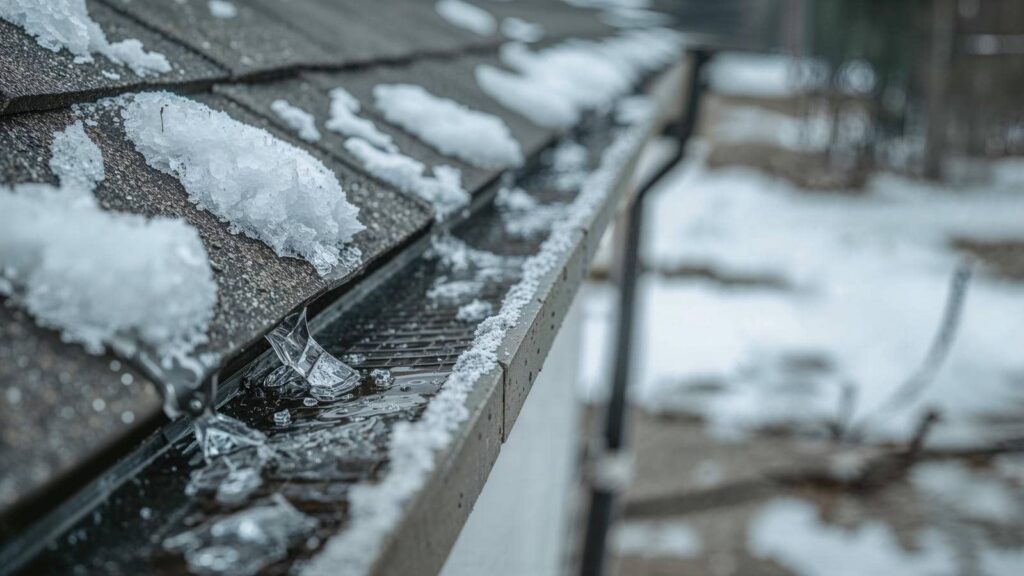
Proper snow load management is significant; excessive snow can lead to structural damage and costly repairs. By prioritizing ice dam prevention, you protect your home from water intrusion and mold growth, creating a safe environment for your family.
Join others in your community who value proactive roof care. By taking these steps, you’re not just maintaining your roof—you’re investing in your home’s longevity and your family’s well-being.
Addressing Common Winter Roof Issues
As winter settles in, homeowners often face a range of challenges that can impact their roofs. One of the most pressing issues is roof leaks, which can occur due to ice dams or damaged shingles. These leaks compromise your home’s structural integrity and lead to costly repairs down the line.
It’s essential to inspect your roof regularly during these colder months to catch any potential problems early.
Additionally, inadequate thermal insulation can exacerbate roof issues. When your attic isn’t properly insulated, heat escapes, causing snow to melt and refreeze, leading to ice buildup and further leaks.
By ensuring your roof is well-maintained and your insulation is adequate, you can create a warm, safe environment for your family.
Don’t wait until problems escalate; prioritize addressing these common winter roof issues to protect your home and enhance its longevity.
Choosing the Right Time for Repairs
How can you determine the best time for roof repairs during the winter months? Understanding seasonal considerations is essential for effective repair scheduling. Winter can be unpredictable, impacting your roof’s condition and repair feasibility. It’s best to monitor weather forecasts, aiming for dry, mild days when temperatures are above freezing. This ensures materials adhere properly and minimizes safety risks.
Here’s a quick reference table to help you plan:
| Day Type | Conditions Needed | Recommended Action |
|---|---|---|
| Clear & Sunny | Above 32°F | Schedule repairs |
| Light Snow | Mild accumulation | Assess damage, delay repairs |
| Heavy Snow | Significant accumulation | Avoid repairs |
| Ice Formation | Ice dams present | Immediate assessment |
| Windy Conditions | Gusts over 30 mph | Postpone repairs |
Maintaining Gutters and Drainage Systems
Gutters and drainage systems play an essential role in protecting your roof and home during winter. When leaves and debris clog your gutters, water can’t flow properly, leading to ice dams and potential roof damage. That’s why gutter cleaning is vital before the cold sets in.
Regular cleaning helps ensure that water drains away effectively, reducing the risk of costly repairs.
Additionally, don’t overlook the importance of drainage repair. If you notice pooling water around your foundation or leaks in your gutters, addressing these issues promptly can prevent significant structural damage.
Make it a priority to inspect your drainage systems as part of your winter preparation routine.
Frequently Asked Questions
How Can I Tell if My Roof Needs Immediate Attention?
Look for visible roof leaks, water stains on ceilings, or missing shingles. Schedule winter inspections to catch problems early, ensuring your roof remains intact and protecting your home from harsh weather. Don’t wait for damage to escalate!
What Are the Signs of Roof Damage in Winter?
You’ll notice signs like water stains indoors, icicles forming, or even the dreaded ice-damming effects. These can lead to winter leaks, so keep an eye out and act quickly to protect your home.
Can I Perform Roof Maintenance Myself During Cold Months?
You can perform DIY maintenance during cold months, but prioritize safety precautions. Ensure proper gear, avoid icy surfaces, and consider professional help for complex issues. Your roof’s integrity matters, and safety should always come first.
How Does Snow Load Affect My Roof’s Integrity?
Think of your roof as a protective shield. Excessive snow load can compromise your roof’s integrity, leading to potential leaks or collapses. Regular inspections help ensure it’s strong enough to withstand winter’s weight. Don’t neglect it!
What Materials Are Best for Winter Roof Repairs?
For winter roof repairs, consider using metal roofing for durability and insulation materials like foam boards or fiberglass. These choices effectively withstand cold weather, ensuring your roof remains strong and energy-efficient throughout the harsh months ahead.
Final Thoughts
In winter, an ounce of prevention is worth a pound of cure. By prioritizing roof maintenance, you can prevent costly issues like ice dams and leaks before they arise. Regular inspections, timely repairs, and proper drainage ensure your roof withstands harsh conditions while keeping your home safe and energy-efficient. Don’t wait for a problem to snowball; take proactive steps now to protect your investment and your family’s comfort during the cold months ahead.