Is it true that neglecting your roof in winter can lead to costly repairs? Many homeowners underestimate the importance of winter roof care, but a little attention can save you a lot of money and trouble. From inspecting for leaks to managing snow buildup, there are several key steps you should take to protect your home. Let’s explore the essential tips that can keep your roof in top shape during the cold months.
Key Takeaways
- Conduct regular roof inspections to identify and address missing shingles, leaks, and structural issues before winter weather sets in.
- Safely remove snow and ice buildup from roofs and gutters using a roof rake, avoiding sharp tools that could cause damage.
- Maintain gutters and downspouts by clearing debris regularly to ensure proper drainage and prevent ice dams from forming.
- Enhance attic insulation and ventilation to reduce heat buildup, minimize ice dams, and improve overall energy efficiency in your home.
- Prepare for winter storms by securing loose roof components, trimming overhanging branches, and stocking up on emergency repair supplies.
Inspect Your Roof Regularly
While winter weather can be harsh on your home, regularly inspecting your roof can help you catch potential problems early. You don’t want to wait until a leak appears or a shingle blows off to realize you need roof maintenance. Instead, make seasonal checks a part of your winter routine. Grab a pair of binoculars and look for any missing or damaged shingles, as well as signs of wear around chimneys and vents.
Don’t forget to check your gutters, too! Clogged gutters can lead to water pooling, which can cause ice dams that damage your roof. If you’re not comfortable climbing up, consider hiring a professional for a thorough inspection.
Clear Snow and Ice Buildup
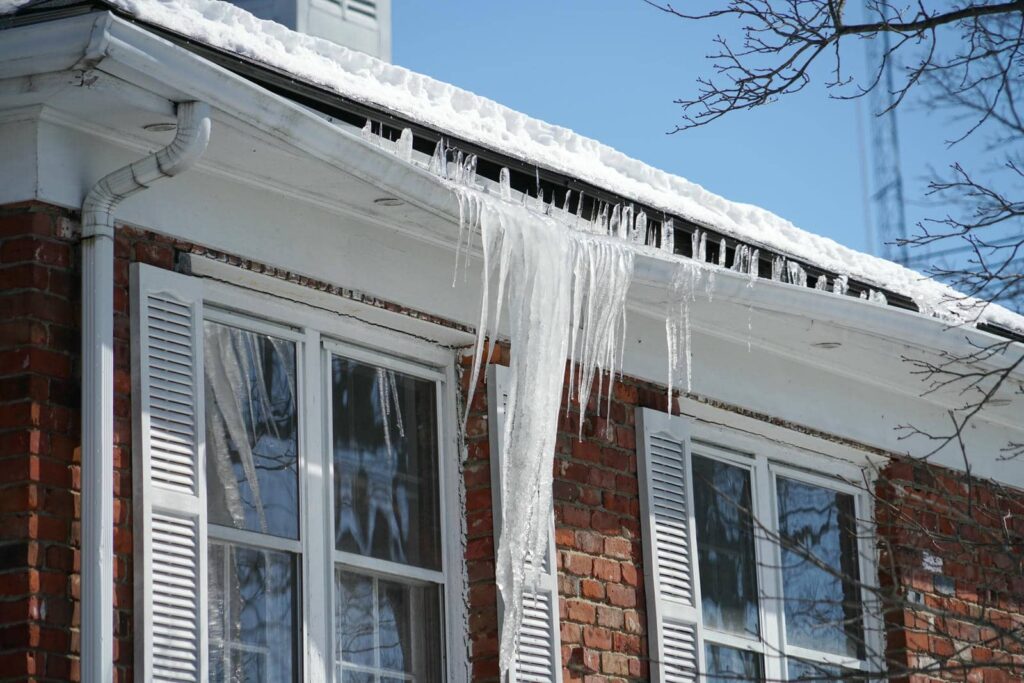
After inspecting your roof for any issues, the next step is to address snow and ice buildup. Heavy snow can weigh down your roof, risking structural damage, while ice can create dangerous icicles and lead to leaks.
Start with snow removal; use a roof rake to gently pull snow off the edge of your roof, avoiding the risk of damaging shingles. Remember to clear any accumulated snow from gutters, too, as this helps prevent ice dams.
For ice prevention, consider installing heat cables along eaves and in gutters, which can help melt ice before it becomes a hazard. If you notice significant ice buildup, it’s best to contact a professional for safe removal.
Check for Damaged Shingles
As winter sets in, it’s essential to check your roof for damaged shingles.
Look for any missing shingles or visible cracks that could let water seep in and cause further issues.
Addressing these problems early can save you from costly repairs down the line.
Identify Missing Shingles
Many homeowners overlook the importance of checking for missing or damaged shingles, but doing so can save you from costly repairs down the line.
Regular roof maintenance is essential, especially during winter. Here’s how to identify missing shingles:
Visual Inspection: Look at your roof from the ground. Are there any areas that seem uneven or have a different color?
Check the Ground: After a storm, inspect your yard for fallen shingles; they could indicate a larger issue.
Wind Damage: Strong winds can lift shingles. Verify that all shingles are secure, as this may require shingle replacement.
Inspect for Cracks
Once you’ve checked for missing shingles, it’s time to inspect your roof for cracks.
Start by examining the edges of your shingles and the seams where they overlap. Look for any visible cracks or wear, as these can lead to serious issues. If you spot any damage, consider roof sealing to protect against leaks.
Sealing cracks helps with moisture prevention, keeping your home dry during the winter months. Remember, a small crack can quickly turn into a bigger problem, so don’t underestimate the importance of this step.
Regular inspections foster a sense of community care and responsibility towards your home. By staying proactive, you’re not just maintaining your roof; you’re ensuring a safe haven for you and your loved ones.
Maintain Gutters and Downspouts
To ensure your roof stays in top shape during winter, you can’t overlook the importance of maintaining your gutters and downspouts.
When snow and ice accumulate, clogged gutters can lead to serious problems. Here are three essential tips for effective gutter cleaning and downspout maintenance:
Clear Debris: Regularly remove leaves, twigs, and other debris from your gutters to secure proper water flow.
Check for Blockages: Inspect downspouts for any blockages that could prevent water from draining away from your home. Use a plumber’s snake if necessary.
Ensure Proper Pitch: Make sure your gutters are sloped correctly so that water flows toward the downspouts, minimizing pooling and ice formation.
Ensure Proper Attic Insulation
To keep your home cozy during winter, ensuring proper attic insulation is key.
You’ll want to choose the right insulation material and install it correctly to maximize its effectiveness.
The benefits of good insulation go beyond comfort; they can also save you money on energy bills.
Insulation Material Types
Proper attic insulation is essential for maintaining a comfortable home during the winter months.
Choosing the right materials can make a big difference in your energy bills and overall comfort. Here are three popular insulation types you should consider:
Foam Board: This rigid insulation provides excellent thermal resistance and is great for sealing gaps in your attic.
Cellulose Insulation: Made from recycled paper products, it’s an eco-friendly choice that offers good soundproofing and thermal performance.
Fiberglass Batts: Easy to install, these are a common choice for many homeowners, providing decent insulation at a reasonable price.
Proper Installation Techniques
Choosing the right insulation materials is just the first step; how you install them plays a significant role in their effectiveness. To ensure proper attic insulation, start by following the recommended installation standards for your chosen materials.
Make certain to fill all gaps and avoid compressing the insulation, as this can reduce its efficiency. Pay attention to ventilation; proper airflow is essential in preventing moisture buildup, which can damage your roofing materials.
If you’re using batts or rolls, cut them to fit snugly around obstacles like vents and ductwork. Finally, always double-check your work to make sure everything is tightly sealed.
Benefits of Insulation
While you might think of insulation as just another home improvement project, its benefits extend far beyond mere comfort.
Proper attic insulation is essential for every homeowner who wants to create a cozy and efficient space. Here are three key advantages:
Energy Efficiency: Insulation helps maintain your home’s temperature, reducing heating and cooling costs.
Soundproofing Benefits: It blocks unwanted noise, creating a more peaceful environment, ideal for family gatherings or quiet evenings.
Increased Home Value: Well-insulated homes often have higher resale values, appealing to future buyers.
Address Leaks Promptly
When winter storms hit, don’t wait to tackle leaks in your roof. Prompt action is vital to prevent further damage and keep your home safe and cozy.
Start with leak detection—check for water stains, damp spots, or mold. If you spot any issues, grab a flashlight and inspect your roof for missing shingles or cracks.
Once you identify the problem, consider your repair options. For small leaks, you may be able to patch them with roofing sealant or tape.
However, if the damage is extensive, it’s best to call in a professional. They can provide a thorough assessment and recommend the best course of action.
Remember, addressing leaks quickly protects your home and fosters a sense of belonging, ensuring your family stays warm and comfortable all winter long.
Stay proactive, and your roof will serve you well through the harshest of storms.
Schedule Professional Inspections
Scheduling professional inspections for your roof is vital, especially as winter approaches.
These inspections help ensure your roof’s winter readiness and can save you from costly repairs later. Here’s what you should focus on during your inspection:
Identifying Weak Spots: Professionals will spot areas that need immediate attention, such as worn shingles or damaged flashing.
Gutter Maintenance: They’ll check your gutters to ensure proper drainage, preventing ice dams and water buildup that can harm your roof.
Insulation and Ventilation: Proper insulation and ventilation are vital for roof maintenance, and experts can assess whether your home is adequately prepared for the cold.
Frequently Asked Questions
How Often Should I Inspect My Roof During Winter?
You should inspect your roof every few weeks during winter. Regular roof maintenance helps identify issues caused by winter weather early, preventing costly repairs and ensuring your home stays warm and safe throughout the season.
What Tools Do I Need for Roof Inspections?
What tools do you need for a thorough roof inspection? Necessary tools include binoculars for a distant view, a sturdy ladder for close inspection, a flashlight to check dark areas, and a notebook for notes.
Can I Remove Snow From My Roof Myself?
Yes, you can remove snow from your roof yourself. Just remember to use safe snow removal techniques, like a roof rake, and always follow roof safety precautions to avoid injuries. Your safety’s the priority!
What Should I Do if I Find a Roof Leak?
If you find a roof leak, start with leak detection to identify the source. Then, explore repair options like patching or calling a professional. Don’t hesitate; addressing it promptly saves you from bigger problems later.
When Is the Best Time to Schedule Professional Inspections?
You should schedule professional inspections during seasonal maintenance, ideally in the fall. This timing allows you to address potential issues before winter, maximizing inspection benefits and ensuring your roof stays in great shape through harsh weather.
Review
Taking care of your roof this winter is essential—after all, a single ice dam could release a waterfall in your living room! By regularly inspecting your roof, clearing snow, and maintaining gutters, you can prevent costly damage. Don’t forget to check for damaged shingles and verify your attic insulation is up to par. Be proactive and address any leaks promptly. If you’re unsure, schedule a professional inspection; it’s always better to be safe than sorry when it comes to your home!