Metal Roof Maintenance is essential for maximizing the lifespan and performance of your metal roofing system—even though many assume these roofs require little to no upkeep. Routine tasks like inspecting for rust, tightening or replacing loose fasteners, and keeping gutters clear can stop minor issues from turning into expensive repairs. It’s equally important to schedule professional evaluations and maintain thorough records of each service. Understanding and prioritizing these core maintenance steps will help keep your roof strong, efficient, and long-lasting. So, what should be at the top of your maintenance checklist?
Key Takeaways
- Regularly inspect for rust, corrosion, and damage, especially in seams and areas prone to water accumulation.
- Clean gutters and downspouts frequently to ensure proper water flow and prevent clogs.
- Schedule professional inspections at least twice a year to identify potential issues early.
- Maintain detailed records of all maintenance activities, including dates, services performed, and receipts.
- Address any fastener or seal degradation promptly to prevent leaks and maintain roof integrity.
Inspect for Rust and Corrosion
Inspecting for rust and corrosion is essential for maintaining your metal roof’s integrity. As a homeowner, you need to understand that even small rust spots can lead to significant issues if left untreated.
Begin your inspection by examining the seams, edges, and any areas where water may accumulate. Look for discoloration, flaking paint, or any signs of rust formation.
If you spot any rust, you should act quickly. Rust treatment involves sanding down the affected areas and applying a rust-inhibiting primer before repainting.
For corrosion prevention, consider applying a protective coating to your entire roof. This protects against moisture and extends the lifespan of your metal roof.
Check Fasteners and Seals
Check fasteners and seals regularly to ensure your metal roof remains watertight and secure. Start by identifying the different fastener types used in your roofing system, such as screws, bolts, or rivets. Each type has specific installation requirements, and ensuring they’re tight will prevent leaks and structural issues.
Next, examine the seals around fasteners and joints. A good sealant option, like silicone or polyurethane, can enhance waterproofing and flexibility. Over time, these sealants can degrade due to weather exposure, so it’s essential to replace them as needed.
Inspect for any signs of wear, such as cracking or peeling, that may compromise your roof’s integrity. Addressing fastener and seal issues promptly prolongs the life of your metal roof. It fosters a sense of security in your home, contributing to a safe living environment for you and your family.
Clean Gutters and Downspouts
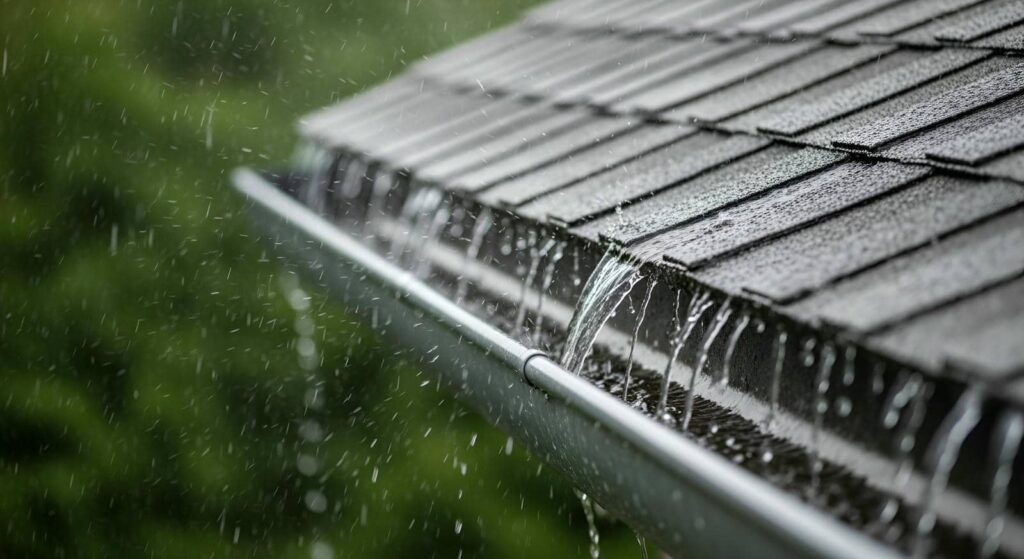
To keep your metal roof performing at its best, regularly cleaning gutters and downspouts is essential. Neglecting this task can lead to water pooling, which may damage your roofing system over time.
Here’s what you should focus on during your gutter cleaning and downspout maintenance:
- Remove debris: Clear leaves, twigs, and dirt that can clog your gutters.
- Check for leaks: Look for any signs of leaks in your downspouts to prevent further issues.
- Ensure proper flow: Make sure water flows freely through the gutters and downspouts to avoid overflow.
Remove Debris From Roof Surface
To maintain your metal roof’s integrity, establish a regular cleaning schedule to remove leaves, branches, and other debris.
This prevents moisture buildup and allows you to inspect for any potential damage during each cleaning.
Regular maintenance ensures your roof remains in peak condition and extends its lifespan.
Regular Cleaning Schedule
Regularly cleaning your metal roof is crucial for maintaining its integrity and longevity.
Establishing a cleaning schedule is an important part of your seasonal tasks. You should aim to remove debris to prevent potential damage.
Here are some effective cleaning tools to take into account:
- Soft-bristle broom or blower for loose debris
- Mild detergent mixed with water for deeper cleaning
- Non-abrasive scrub pads for stubborn stains
Inspect for Damage
After you’ve cleared debris from your metal roof, it’s time to inspect for any damage that may have occurred. Conducting a thorough damage assessment is vital for maintaining roof performance. Look for signs such as dents, scratches, or rust, as these can compromise the integrity of your roof.
| Damage Type | Recommended Action |
|---|---|
| Dents | Assess severity; consider repair |
| Scratches | Touch up with paint; prevent rust |
| Rust | Remove and treat; apply sealant |
| Loose Panels | Tighten or replace as necessary |
| Leaks | Seal immediately; consult a pro |
Regular inspections allow you to address issues early, ensuring your metal roof serves you well for years to come.
Examine Flashing and Valleys
Examining the flashing and valleys of your metal roof is essential for maintaining its integrity.
These areas are critical for directing water away and preventing leaks. Different flashing types and valley designs can notably impact your roof’s performance, so you should check them regularly.
Here are key aspects to look for:
- Condition of Flashing: Verify there are no cracks, bends, or rust spots. Damaged flashing can lead to serious leaks.
- Valley Integrity: Inspect valley designs for any debris or blockages that may impede water flow.
- Sealing: Check that all seams and joints are properly sealed to prevent moisture infiltration.
Assess Insulation and Ventilation
Proper insulation and ventilation are essential for maximizing the performance of your metal roof. Start by evaluating the insulation types in your attic or ceiling. Common insulation types include fiberglass, foam board, and spray foam, each offering different thermal resistance and moisture control.
Make sure your insulation is properly installed and free from gaps, as this can enhance energy efficiency and prevent heat loss.
Next, assess your ventilation systems. Adequate ventilation allows heat and moisture to escape, reducing the risk of condensation and prolonging your roof’s lifespan.
Look for soffit vents, ridge vents, and gable vents that work together to create a balanced airflow.
Monitor for Signs of Leaks
While enjoying the benefits of your metal roof, it’s essential to regularly monitor for signs of leaks, as even minor issues can lead to significant damage over time.
Effective leak detection is key to maintaining your roof’s integrity and ensuring moisture control.
Look for these indicators:
- Water stains on ceilings or walls
- Rust or corrosion on metal panels
- Damp spots in your attic or insulation
Regular inspections help you catch leaks early.
Pay attention after heavy rain or snow, as this is when leaks are more likely to reveal themselves.
If you notice any signs of moisture, act quickly to prevent further damage.
By staying proactive, you can extend the life of your metal roof and maintain a comfortable living environment.
Taking these steps fosters a sense of community among homeowners who prioritize the longevity of their homes.
Schedule Professional Inspections
After monitoring for signs of leaks, scheduling professional inspections becomes an essential step in maintaining your metal roof. These inspections should occur at least twice a year, ideally in spring and fall, to ensure early detection of potential issues. When selecting a professional, prioritize their qualifications; look for certified roofing experts with experience in metal roofing systems.
| Inspection Frequency | Recommended Qualifications | Benefits of Professional Inspections |
|---|---|---|
| Twice a year | Certified roofing experts | Early issue detection |
| After severe storms | Experienced in metal roofs | Extended roof lifespan |
| Following major repairs | Local references | Enhanced safety checks |
| Before warranty expiration | Warranty knowledge | Peace of mind |
Keep Records of Maintenance Activities
Keeping accurate records of maintenance activities is crucial for every homeowner with a metal roof. By maintaining detailed documentation practices, you can ensure your roof remains in peak condition and enhance its longevity.
Here are some essential components to include in your maintenance logs:
- Dates of inspections and repairs: Keeping track of when you performed maintenance helps identify patterns over time.
- Details of work completed: Document what tasks you performed, such as cleaning gutters or sealing seams, to create a thorough history.
- Materials used: Record any products or materials applied during maintenance, which can assist future repairs or inspections.
These records help you stay organized and also be indispensable if you ever decide to sell your home.
Potential buyers will appreciate knowing your roof has been well-maintained, adding value to your property.
Frequently Asked Questions
How Often Should I Perform Metal Roof Maintenance?
You should perform metal roof maintenance at least twice a year, considering seasonal changes. Regular inspections help identify issues early, while proper maintenance frequency ensures your roof remains in top shape and protects your home effectively.
Can I Walk on My Metal Roof Safely?
Yes, you can walk on your metal roof safely, but make certain you take safety precautions. Always conduct a roof inspection first, checking for stability, slippery spots, and secure footing to prevent potential falls.
What Tools Do I Need for Maintenance?
You’ll need tools like a ladder, a safety harness, rubber-soled shoes, a screwdriver, and a maintenance checklist for a thorough roof inspection. These ensure you can perform necessary upkeep while staying safe and secure on your metal roof.
Is Metal Roof Maintenance Different in Winter?
Yes, metal roof maintenance differs in winter. You need to take winter precautions, such as regular snow removal, to prevent ice dam formation and ensure proper drainage, protecting your roof’s integrity and extending its lifespan.
How Long Does a Metal Roof Last With Proper Maintenance?
With proper maintenance, a metal roof can enjoy a lifetime expectancy of 40 to 70 years. Regular inspections, cleaning, and addressing minor issues are essential maintenance tips to ensure your roof’s longevity and performance.
Recap
Maintaining your metal roof is essential for its longevity and performance. By routinely inspecting for rust, checking fasteners, and cleaning gutters, you ensure that minor issues don’t escalate into costly repairs. Don’t forget to schedule professional inspections and keep detailed records of your maintenance activities. Taking these steps will keep your roof in peak condition and safeguard your investment.