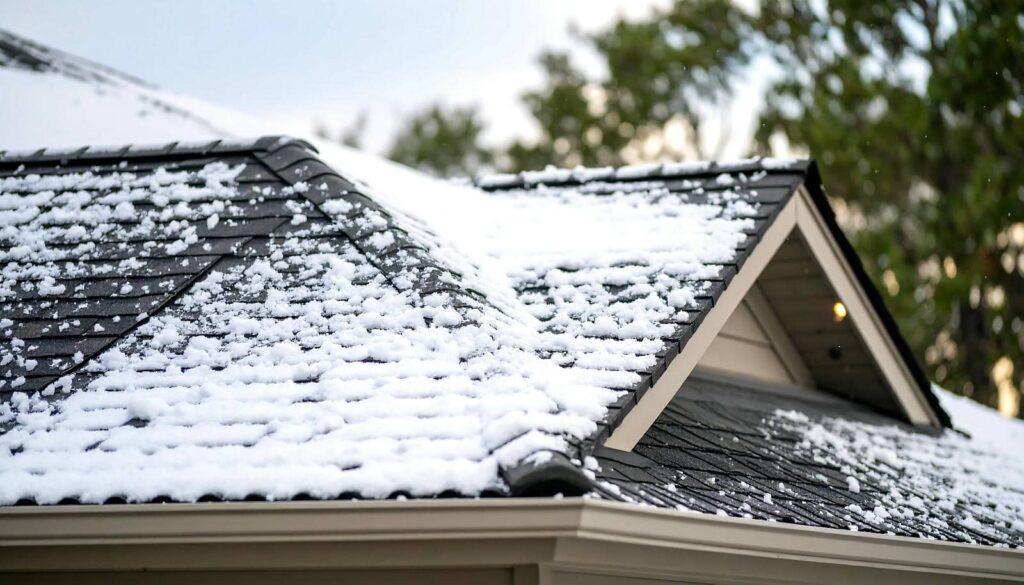
Just as a sturdy ship needs regular maintenance to weather a storm, your roof requires attention to withstand winter’s harsh elements. Neglecting your roof can lead to costly repairs down the line. By understanding key practices for winter roof care, you can safeguard your home and investment. Are you prepared to tackle the challenges winter brings to your roof?
Key Takeaways
- Ensure proper insulation and weatherproofing to prevent heat loss and ice dam formation on your roof.
- Regularly inspect shingles and flashings for damage, and consult a professional for significant issues.
- Maintain clear gutters to facilitate drainage and prevent moisture damage during winter storms.
- Safely remove snow buildup using a roof rake, working from the ground to minimize risks.
- Schedule timely inspections to catch minor problems early and avoid costly repairs down the line.
Importance of Winter Roof Maintenance
While winter may bring picturesque snow-covered landscapes, it also poses significant risks to your roof if proper maintenance isn’t prioritized. Ensuring adequate roof insulation is critical during colder months. A well-insulated roof prevents heat loss, reduces ice dam formation, and protects your home from moisture damage.
You can enhance your roof’s resilience by employing effective weatherproofing techniques. These include sealing any gaps, applying weather-resistant coatings, and ensuring your gutters are clear to facilitate proper drainage.
Regularly checking for missing shingles or loose flashing is equally important, as these vulnerabilities can exacerbate winter-related issues. By investing time in winter roof maintenance, you safeguard your home and foster a sense of belonging in your community, demonstrating care for your property.
Stay proactive; taking these steps now will pay off by maintaining your roof’s integrity and ensuring a warm, safe haven throughout the winter months.
Inspecting Your Roof for Damage
Before winter sets in, you should thoroughly inspect your roof for damage to identify any potential issues that could worsen during the colder months.
Start your roof inspection by checking shingles for cracks, curling, or missing pieces. Look for any signs of water stains or mold on the underside of your roof, indicating leaks. Don’t forget to examine flashings around chimneys, vents, and skylights, as these areas are prone to damage.
Perform a damage assessment of your gutters and downspouts, ensuring they’re clear of debris and properly attached. Pay attention to any sagging areas that could indicate structural problems.
If you spot significant damage, it’s wise to consult a professional roofer for a thorough evaluation and repairs. By taking these steps, you’ll help protect your home from winter weather and foster a sense of belonging in your community, knowing your roof is well-maintained and secure.
Clearing Snow and Ice Buildup
When snow accumulates on your roof, it’s essential to remove it safely to prevent structural damage.
You’ll also want to address any ice buildup to avoid ice dams, which can lead to leaks and further complications.
Implementing proper snow removal techniques can protect your roof and extend its lifespan.
Safe Snow Removal Techniques
As snow accumulates on your roof, it’s vital to employ safe snow removal techniques to prevent damage and maintain structural integrity.
Using proper snow removal equipment is essential for ensuring roof safety while minimizing the risk of injury.
- Use a roof rake with a long handle to safely remove snow from the edge of the roof.
- Always work from the ground whenever possible; avoid climbing onto the roof.
- Clear snow in layers to reduce weight and prevent sudden shifts.
- Wear non-slip footwear and gloves to ensure stability and grip.
Preventing Ice Dams
After safely removing snow from your roof, it’s important to address potential ice dams that can form due to snow and ice buildup.
Ice dams occur when heat loss from your home warms the roof, causing snow to melt and refreeze at the eaves. This can lead to significant water damage inside your home.
To prevent them, make sure to have proper insulation and ventilation in your attic to reduce heat buildup. Check for ventilation issues that may hinder airflow, as adequate circulation keeps your roof temperature consistent.
Regularly clear snow from the edges of your roof, and consider using a roof rake.
Gutter Maintenance During Winter
During winter, maintaining your gutters is essential to prevent ice dams that can cause significant roof damage.
Regular cleaning techniques can help ensure your gutters function properly, allowing water to flow and reducing the risk of freezing.
Ice Dam Prevention Tips
To prevent ice dams from forming on your roof this winter, it’s crucial to maintain your gutters effectively. Clogged gutters can trap water, leading to ice dam formation and potential roof damage.
Here are some key tips to keep in mind:
Clear debris: Regularly check and remove leaves, twigs, and other blockages.
Inspect for leaks: Confirm there are no gaps or leaks in your gutters that could allow water to escape.
Confirm proper slope: Your gutters should slope toward the downspouts to facilitate drainage.
Check roof insulation: Adequate roof insulation helps maintain even temperatures, reducing the likelihood of melting snow that can refreeze in the gutters.
Gutter Cleaning Techniques
While winter presents unique challenges for gutter maintenance, effective cleaning techniques can prevent ice dams and protect your roof.
Start by inspecting your gutters for debris accumulation. Use a sturdy ladder to safely access your gutters, and wear gloves to remove leaves, twigs, and dirt.
If you have gutter guards, make certain they’re free from blockages, as clogs can lead to overflowing. Consider using a garden hose to flush out any remaining debris.
For seasonal maintenance, it’s wise to clean your gutters at least twice during the winter months. Regular upkeep maintains proper drainage and enhances your home’s longevity.
Identifying and Repairing Leaks
When snow and ice accumulate on your roof, water can seep through even the smallest cracks, making it vital to identify and repair leaks promptly.
Start with leak detection by inspecting your ceilings and walls for water stains or dampness. Check your roof for missing shingles, cracks, or any signs of wear.
To effectively tackle repairs, consider these techniques:
- Use roofing sealant to fill small cracks and gaps.
- Replace damaged shingles to prevent further leakage.
- Install ice and water shields in vulnerable areas.
- Ensure proper ventilation to reduce ice dam formation.
Preparing for Winter Storms
As winter storms can bring heavy snow and ice, preparing your roof in advance is vital to maintaining its integrity. Start by inspecting your roof for any weak spots, and verify that gutters are clear to prevent ice dams. Additionally, stock up on emergency supplies, including tarps, roofing cement, and a sturdy ladder for post-storm inspections.
Here’s a quick checklist for effective storm preparedness:
| Task | Description |
|---|---|
| Inspect Roof | Look for cracks, loose shingles |
| Clear Gutters | Remove debris to prevent blockages |
| Secure Loose Materials | Fasten any loose shingles or tiles |
| Stock Emergency Supplies | Gather tarps, cement, and tools |
| Plan for Post-Storm Check | Schedule a roof inspection |
Choosing the Right Roofing Materials
Choosing the right roofing materials is essential for ensuring your home can withstand winter’s harsh conditions. When selecting materials, you’ll want to prioritize durability and energy efficiency.
Here are some options to evaluate:
Asphalt Shingles: Affordable and widely used; they provide decent insulation.
Metal Roofing: Excellent for shedding snow and ice, enhancing energy efficiency.
Slate Tiles: Long-lasting and aesthetically pleasing, but heavier and pricier.
Wood Shakes: Natural and beautiful, but require more maintenance in winter.
Each of these roofing materials has unique advantages that can impact your home’s protection against winter elements.
By making an informed choice, you enhance your home’s structural integrity and contribute to its energy efficiency. This can help you save on heating costs while keeping your family comfortable during those cold months.
When to Call a Professional Roofer
If you notice signs of damage or wear on your roof, it’s crucial to call a professional roofer promptly. Delaying can lead to more significant issues, especially during winter when snow and ice are prevalent.
Look for missing shingles, leaks, or sagging areas, as these often require emergency repairs. Regular seasonal inspections can help you catch minor problems before they escalate.
If you suspect your roof may not withstand harsh winter conditions, consult a professional. They’ve the expertise to assess the damage accurately and recommend necessary repairs.
Additionally, if you’re unsure about the integrity of your roof after a heavy storm, it’s best to err on the side of caution.
Frequently Asked Questions
How Can I Prevent Ice Dams From Forming on My Roof?
To prevent ice dams from forming on your roof, focus on insulation upgrades in your attic. Proper insulation minimizes heat loss, maintaining a consistent roof temperature, which is essential for effective ice dam prevention.
What Are the Signs of Roof Damage After a Winter Storm?
After winter storms, some homeowners report roof leaks. Check for missing shingles, sagging areas, or water stains inside your home. These signs indicate damage that needs immediate attention to prevent further issues.
Can I Use a Roof Rake to Clear Snow?
Yes, you can use a roof rake for snow removal techniques. Just make sure you prioritize roof safety by standing on stable ground and avoiding direct contact with the roof to prevent further damage.
How Often Should I Inspect My Roof During Winter?
You should inspect your roof at least once a month during winter. This essential step on your winter checklist helps catch issues early, ensuring your home stays safe and cozy for you and your loved ones.
What Are the Best Roofing Materials for Snowy Climates?
For snowy climates, metal roofing and slate shingles are excellent choices. They’re durable, resistant to snow accumulation, and provide superior insulation. You’ll appreciate their longevity and low maintenance, ensuring your home’s protection through harsh winters.
Wrap-Up
In winter, a well-maintained roof is your first line of defense against the elements. By staying proactive with inspections, clearing snow, and maintaining gutters, you can avoid costly repairs down the road. Remember, an ounce of prevention is worth a pound of cure. If you encounter significant issues or feel overwhelmed, don’t hesitate to call a professional roofer. Keeping your roof in top shape ensures your home remains safe and sound through even the harshest winter storms.