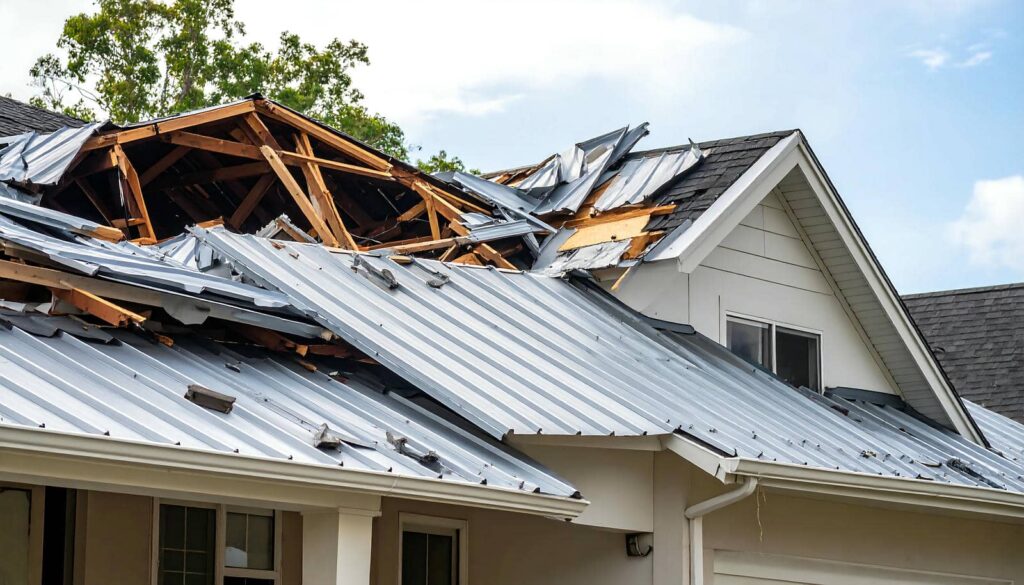
After a storm, your metal roof might sustain damage that isn’t immediately visible. It’s essential to assess this damage promptly to avoid more severe issues down the line. Neglecting repairs can lead to leaks, rust, and structural weaknesses, compromising your home’s integrity. Understanding the importance of timely restoration can save you from costly repairs in the future. So, what steps should you take to ensure your roof is restored effectively?
Key Takeaways
- Prompt restoration prevents further deterioration, safeguarding against leaks and structural weaknesses caused by storm damage.
- Addressing storm damage quickly enhances the longevity and durability of your metal roof, protecting your investment.
- Restoration maintains property value and appearance, demonstrating commitment to home care and community pride.
- Professional services ensure thorough assessments and effective repairs, providing peace of mind with warranties on completed work.
- Timely repairs improve energy efficiency, potentially lowering utility costs and increasing the property’s appeal to future buyers.
Assessing Storm Damage to Your Metal Roof
How can you effectively assess storm damage to your metal roof? Begin with a thorough roof inspection, focusing on visible areas and hard-to-reach spots. Look for dents, scratches, or loose panels that may indicate damage.
Pay attention to flashing, as it’s essential for preventing leaks. Also, check for any rust, particularly around seams and fasteners, which could compromise the roof’s integrity.
Next, conduct a damage assessment by documenting your findings. Take clear photos to support your claims if you need to file an insurance claim.
Inspect the interior of your home for signs of water intrusion, such as stains or mold on ceilings and walls, which could suggest underlying issues.
Finally, don’t hesitate to consult a professional if you’re unsure about your assessment. They can provide expert insights and guidance on the best course of action for repairs or restoration.
Your metal roof deserves careful consideration.
Importance of Timely Roof Restoration
After evaluating the storm damage to your metal roof, addressing any issues promptly becomes essential. Timely action helps prevent further deterioration, which can lead to more extensive and costly repairs down the line.
The longer you wait, the more vulnerable your roof becomes to leaks, rust, and structural weaknesses. A well-defined restoration timeline is vital in ensuring that repairs are completed efficiently, safeguarding your home from additional damage.
Moreover, taking swift action reinforces your commitment to maintaining your property’s value and appearance. It signals to neighbors and the community that you prioritize home care, fostering a sense of belonging and pride.
Common Issues Faced by Metal Roofs After Storms
While storms can bring much-needed rain, they often leave behind a host of issues for metal roofs.
After a storm, you might notice several common problems that could affect your home’s integrity.
Rust Formation: Exposure to moisture can lead to rust, compromising the metal’s durability.
Water Leaks: Damaged seams and fasteners can create pathways for water to infiltrate your home.
Dents and Dings: Hail or flying debris can cause visible damage, undermining your roof’s protective barrier.
Loose Panels: High winds can loosen panels, making your roof vulnerable to further damage.
Addressing these issues promptly is essential.
Ignoring them can lead to more extensive repairs and increased costs down the road.
Benefits of Professional Restoration Services
When you choose professional restoration services for your metal roof, you ensure a thorough assessment of storm damage and benefit from expert knowledge and skills that can greatly enhance the longevity of your roof.
These services provide expert assurance, ensuring that every aspect of your roof is evaluated and addressed by trained professionals.
They utilize advanced restoration techniques tailored specifically for metal roofs, which can prevent further damage and maintain structural integrity.
DIY vs. Professional Repairs
Choosing between DIY repairs and hiring professionals for your metal roof restoration can considerably impact the outcome of your project.
While DIY techniques can be tempting, it’s crucial to weigh the pros and cons. Here’s why you might consider professional expertise instead:
Safety: Climbing on roofs can be hazardous; professionals are trained to handle such risks.
Quality: Experts ensure high standards of workmanship, reducing the chance of future issues.
Time: Professionals can complete the job faster, allowing you to focus on what matters most.
Warranty: Many professional services offer warranties, providing peace of mind for your investment.
Ultimately, your choice reflects your priorities.
If you value safety and lasting quality, opting for professional restoration could be the best path forward.
Don’t underestimate the importance of expert knowledge when restoring your metal roof.
Choosing the Right Materials for Restoration
When restoring your metal roof, you’ll want to assess the durability of the materials you choose to ensure long-lasting protection.
Additionally, matching the color and finish to your existing roof is essential for maintaining aesthetic consistency.
Selecting the right materials enhances the roof’s appearance and its overall performance against future storms.
Assessing Material Durability
While evaluating material durability is essential after storm damage, selecting the right restoration materials can significantly impact the longevity and performance of your metal roof.
Prioritizing material resilience and corrosion resistance ensures your roof withstands future storms. Here are four key factors to take into account:
Material Type: Opt for high-quality metals, such as aluminum or galvanized steel, known for their durability.
Protective Coatings: Choose materials with superior coatings that enhance corrosion resistance.
Thickness: Thicker materials often offer better resilience against harsh weather conditions.
Warranty: Select products with strong warranties that reflect the manufacturer’s confidence in their durability.
Making informed choices now can safeguard your home and provide peace of mind for years to come.
Matching Color and Finish
To achieve a seamless restoration of your metal roof, it’s essential to match the color and finish with the existing materials. Start by conducting thorough color matching; use samples to ensure the new coatings blend perfectly.
Different metal roofs can have varying finishes, so pay close attention to texture and sheen during finish selection. This enhances the aesthetic appeal and maintains the roof’s integrity and value.
Additionally, consider the manufacturer’s specifications to find compatible materials that offer durability and weather resistance. Engaging with a professional can help you navigate these choices effectively, ensuring your restoration aligns with your community’s standards and expectations.
A well-matched roof fosters unity and pride in your home’s appearance.
Steps Involved in Metal Roof Restoration
As storm damage can compromise the integrity of your metal roof, it’s vital to follow a systematic restoration process to ensure long-lasting protection.
Here are the essential steps involved in metal roof restoration:
Roof Preparation: Assess the damage and clear debris. This ensures a clean working surface.
Inspection: Check for rust, loose panels, and sealant integrity. Identifying issues early helps in applying effective restoration techniques.
Repairs: Replace damaged panels and replace or reinforce fasteners. This restores the roof’s structural integrity.
Coating: Apply a protective sealant or paint. This enhances aesthetics and adds an extra layer of defense against future storms.
Following these steps ensures that your metal roof is repaired and fortified for the challenges ahead.
Embracing this process brings peace of mind and a sense of belonging to a community that values resilience and care for their homes.
Preventative Measures for Future Storms
To protect your metal roof from future storms, it’s crucial to implement a series of preventative measures.
Regular inspections and maintenance can identify potential weaknesses, while selecting quality materials ensures durability.
Additionally, utilizing reinforced fastening techniques will enhance the roof’s resilience against severe weather conditions.
Regular Inspections and Maintenance
While storm damage can be devastating, regular inspections and maintenance of your metal roof can greatly reduce the risk of future issues.
Implementing routine inspections and adhering to maintenance schedules ensures your roof remains resilient against the elements.
Here are four vital steps to take into account:
Inspect for Rust: Check for early signs of corrosion that could compromise your roof’s integrity.
Clean Gutters and Drains: Ascertain proper water flow to prevent water pooling and potential leaks.
Tighten Loose Fasteners: Regularly secure any loose panels or screws to maintain structural strength.
Seal Cracks and Joints: Promptly address any gaps to prevent moisture intrusion and further damage.
Quality Material Selection
Selecting quality materials for your metal roof is essential in mitigating storm damage and enhancing durability.
You’ll want to evaluate various material types, such as galvanized steel or aluminum, which offer superior resistance to corrosion and impact. These materials withstand harsh weather and reduce the likelihood of future repairs.
Additionally, employing advanced restoration techniques can further extend your roof’s lifespan. For instance, using high-grade sealants and coatings can provide an extra layer of protection against moisture and UV rays.
By prioritizing quality in your material selection, you’ll create a resilient roof that can endure the elements, fostering a sense of security and belonging in your home.
Choose wisely, and invest in materials that stand the test of time.
Reinforced Fastening Techniques
After ensuring you’ve chosen quality materials for your metal roof, the next step involves implementing reinforced fastening techniques to secure it against future storms.
Using effective fastening methods enhances roof stability and ensures your home remains a safe haven during adverse weather.
Here are four key techniques to reflect on:
- Heavy-Duty Screws: Opt for corrosion-resistant screws to withstand harsh conditions.
- Clip Systems: Utilize clips to allow for thermal expansion while keeping panels secure.
- Strapping: Install strapping across rafters for added rigidity.
- Sealants: Apply high-quality sealants around fasteners to prevent water intrusion.
Cost Considerations for Restoration
When evaluating the cost of restoring a metal roof after storm damage, it’s crucial to take into account various factors that influence the overall expense. Your restoration budget should encompass materials, labor, and any unforeseen issues that might arise during the restoration process.
You may want to get multiple estimates from qualified contractors to verify you’re getting a fair price.
Additionally, consider repair financing options if the costs exceed your immediate budget. Many financial institutions offer loans specifically for home repairs, allowing you to spread the expense over time without compromising quality.
Remember, investing in a proper restoration repairs storm damage and enhances your roof’s lifespan.
Long-Term Benefits of Restoring Your Metal Roof
Restoring your metal roof enhances its longevity and contributes to cost-effective maintenance over time.
By investing in restoration, you’re ensuring that your roof withstands future weather events, reducing the need for frequent repairs.
This proactive approach ultimately saves you money and extends the life of your roofing system.
Increased Longevity
If you address storm damage promptly, you can considerably enhance the longevity of your metal roof. A well-maintained roof withstands future storms and maximizes your investment.
By restoring your roof, you can:
- Extend the metal roof’s lifespan, ensuring it lasts for decades.
- Minimize the risk of leaks, safeguarding your home’s interior.
- Improve energy efficiency, reducing heating and cooling costs.
- Boost your property value, making it more appealing to potential buyers.
Ignoring the storm impact can lead to costly repairs down the road.
Prioritizing restoration fosters a sense of community, as you protect your home while contributing to the neighborhood’s resilience.
Taking action today secures tomorrow’s peace of mind.
Cost-Effective Maintenance
While addressing storm damage may seem like an immediate expense, it’s actually a cost-effective maintenance strategy that pays off in the long run.
Restoring your metal roof safeguards your investment and leads to significant cost savings over time. By implementing routine maintenance tips, such as regular inspections and cleaning, you can prevent more extensive damage and costly repairs down the road.
A well-maintained roof enhances energy efficiency, reducing utility bills, and prolongs the roof’s lifespan, which means fewer replacements.
Ultimately, investing in restoration today translates to a more resilient structure and a stronger sense of community belonging, as you share your experiences and knowledge with others facing similar challenges.
Frequently Asked Questions
How Often Should I Inspect My Metal Roof for Storm Damage?
You should inspect your metal roof for storm damage at least twice a year, ideally after severe weather events. Regular metal roof maintenance and prompt storm damage assessment can prevent costly repairs and extend your roof’s lifespan.
Will Insurance Cover the Cost of Roof Restoration?
You’ll find that most insurance policies cover restoration costs, but specifics vary. Check your policy for details on insurance coverage to ensure you’re prepared. It’s wise to document any damage for smoother claims processing.
Can I Restore My Metal Roof Myself?
Yes, you can undertake a DIY restoration of your metal roof, but make sure you follow safety precautions. Evaluate your skills, gather necessary tools, and consider consulting professionals if the damage is extensive or complicated.
What Signs Indicate That My Roof Needs Immediate Restoration?
If your roof’s seams are leaking like a faucet or if you spot rusted panels, it’s time for immediate restoration. Don’t wait; these signs can lead to greater damage and costly repairs down the line.
How Long Does the Metal Roof Restoration Process Take?
The restoration timeline for your metal roof typically ranges from a few days to a week, depending on the weather conditions. Factors like drying time and repair complexity can influence the overall duration of the process.
Review
Restoring your metal roof after storm damage isn’t just about aesthetics; it’s about protecting your home. For example, neglecting repairs can lead to costly interior damage. By acting promptly to repair their roof, they prevented further issues, improved energy efficiency, and preserved their property’s value. Prioritizing timely restoration ensures your home remains safe, resilient, and a source of pride within your community for years.